You Cannot Do It

WORSHIP VIDEO LINK (linked after 10:45 AM Service)

WORSHIP AUDIO LINK

SERMON AUDIO LINK

BULLETIN

SERMON TEXT BELOW

Reformation Sunday 2025
Immanuel Lutheran Church, Hamilton, Ohio
Pastor Kevin Jud
Rev. 14:6-7, Romans 3:19-28, John 8:31-36
October 26, 2025

Sermons online: 
Text and Audio:         immanuelhamiltonchurch.com   click “sermons”
Text:                           pastorjud.org   
Audio:                         pastorjud.podbean.com 
itunes:                         bit.ly/pastorjud
Full Service Audio:    bit.ly/ImmanuelWorship

            Sometime when they are between 18 and 36 months old children begin to tell their parents, “me do it”, or “I do it myself.”  That helpless baby from a few months before is now asserting some independence.  Independence grows and grows and, God-willing, by age 18 or so, your little bundle of joy will be ready to go out and live on his or her own even though no one is ever truly independent. 

            Adults also like to be independent and get things done on their own.  “Me do it.” You learn that you if you want something, you have to work for it.  You get what you deserve.  You find out that if you want something done right you’ve got to do it yourself.  A lot of adults are living out their best toddler selves, “I do it myself.”  And they are quite proud of everything that they have been able to accomplish and this comes very naturally; this is the way of the world.

            But then you get to deal with God who tells you, Isaiah 55:8–9 (ESV) 8 … my thoughts are not your thoughts, neither are your ways my ways, declares the Lord. 9 For as the heavens are higher than the earth, so are my ways higher than your ways and my thoughts than your thoughts.”  God’s way is not the world’s way.

God has given you His law.  His law shows you what to do and what not to do.  It curbs your behavior, it is a mirror to your life, and it is a guide for how to live.  When confronted by God’s law you are tempted to deal with it using the ways of the world. When it comes to God’s law you naturally try to turn it into a do-it-yourself activity.  If you are the least bit honest you know you have a sin problem and yet, by nature, you want to manage your sin problem by yourself.  When you stray from God’s way and follow your own way you try to find strategies to manage that.  When it comes to selfishness, and anger, and not forgiving others, and gossiping, and being intimate outside of marriage, and going to the dark side of the internet, and indulging sinful desires rather than resisting them, you want to deal with these sins yourself.  You make excuses, “I’m just being myself.  I’m just weak.  It’s no big deal.  Everyone is doing it.”  You try to justify yourself, “We all sin.  It was just a mistake — everyone makes mistakes.  It’s not hurting anyone.”  Or you just redefine sin and lower the bar of what it means to obey God’s law until the bar is lying on the ground.  And then you get out a shovel to bury the bar below the surface as you try to pretend you are following God’s law.  When you try to make excuses for sin, or justify your sin, or redefine sin, you end up saying an awful lot of words — but all those words are empty and useless.

            Romans 3:19 (ESV) 19 Now we know that whatever the law says it speaks to those who are under the law, so that every mouth may be stopped, and the whole world may be held accountable to God.”  You want to make excuses for your sin?  Shhhhh. You want to try to justify yourself? Shhhhh.  You want to try to redefine sin?  Shhhhh.   

            Everyone is under the law of God: either hearing and knowing God’s law, or having God’s law written on your heart.  The law of God stops every mouth.  God’s law holds everyone accountable.  You are a sinner and you cannot save yourself.  This is not a do-it-yourself project and this seriously annoys your natural, independent self.  You want to say something in your defense…shhhh.  You cannot do it.  Romans 3:20 (ESV) 20 For by works of the law no human being will be justified in his sight, since through the law comes knowledge of sin.” 

            This is aggravating to your inner, independent, toddler self, saying, “me do it,” but it prepares you for incredible Good News.  Romans 3:21 (ESV) 21 But now the righteousness of God has been manifested apart from the law, although the Law and the Prophets bear witness to it”—

            The righteousness of God has been manifested. His righteousness revealed, disclosed, made known.  What does this mean?  Does it mean that now we can see that God is righteous?  God is righteous, but that is not what this is saying: Romans 3:22 (ESV) 22 the righteousness of God through faith in Jesus Christ for all who believe. …”

            What is manifested is that God’s righteousness is delivered to sinners through faith in Jesus Christ.  What is manifested is your righteousness.  God’s righteousness is delivered to you apart from the law.  You cannot save yourself.  You cannot do it.  You cannot help do it.  It is done completely by Jesus.  You cannot save yourself.  No one can save their own self.  Romans 3:22–25 (ESV) 22 … For there is no distinction: 23 for all have sinned and fall short of the glory of God, 24 and are justified by his grace as a gift, through the redemption that is in Christ Jesus, 25 whom God put forward as a propitiation by his blood, to be received by faith. …”  All fall short of the glory of God – and — God’s righteousness is given through faith in Jesus to those who believe.  Jesus is a propitiation by His blood.  This means Jesus appeases God the Father.  The Father’s wrath is turned away from you and your sin, and turned onto Jesus on the cross.  Jesus drinks the cup of God’s wrath down to the dregs.  Jesus’ suffering and death as the perfect sacrifice for sins appeases God’s justice.  We know this was accepted as a full propitiation, a complete appeasement, because Jesus rose from the dead, conquering sin and death.  Jesus did it all for you.  You are justified by Jesus’ grace as a gift.

Your natural self so much wants to be part of your own salvation but — praise the Lord — that is not how it works.  If you have any part of your salvation you will always be in doubt, because the answer to the questions, “am I good enough, am I doing enough, am I sorry enough?” is always, no. 

            With Christmas approaching there can be awkwardness about gift giving and gift receiving.  Do you buy a gift for your sister’s new boyfriend?  Probably not…but…what if he buy something for you. Adults do not want to receive a gift from someone who they did not give a gift to.  You want to keep things even.  But that is not God’s way.  God gives you a gift and you can give nothing in return.  This is not the way of the world and it can make you uncomfortable, and, I fear, this is why there is such a desire in so many churches to want to add something Jesus’ work to try to pay Jesus back, to be able to help Jesus, to be able to do it yourself, even a little bit.  But God does not need your help. 

            Now, while toddlers like to assert their independence, they are very much powerless, helpless, dependent little people.  They need their parents.  They cannot do it themselves.  They receive everything they need from others and they cannot repay them.  They are totally dependent.  That is also how you are with God.  When the disciples were trying to keep little children away from Jesus…Luke 18:16–17 (ESV) 16 [He] called them to him, saying, “Let the children come to me, and do not hinder them, for to such belongs the kingdom of God. 17 Truly, I say to you, whoever does not receive the kingdom of God like a child shall not enter it.” 

            Your natural self so much wants to be part of your own salvation but — praise the Lord — that is not how it works.  If you have any part of your salvation you will always be in doubt, because the answer to the questions, “am I good enough, am I doing enough, am I sorry enough?” is always, no.  In the desperate, futile attempt to be a part of your own salvation there is always more to do, more to give, more to sacrifice. 

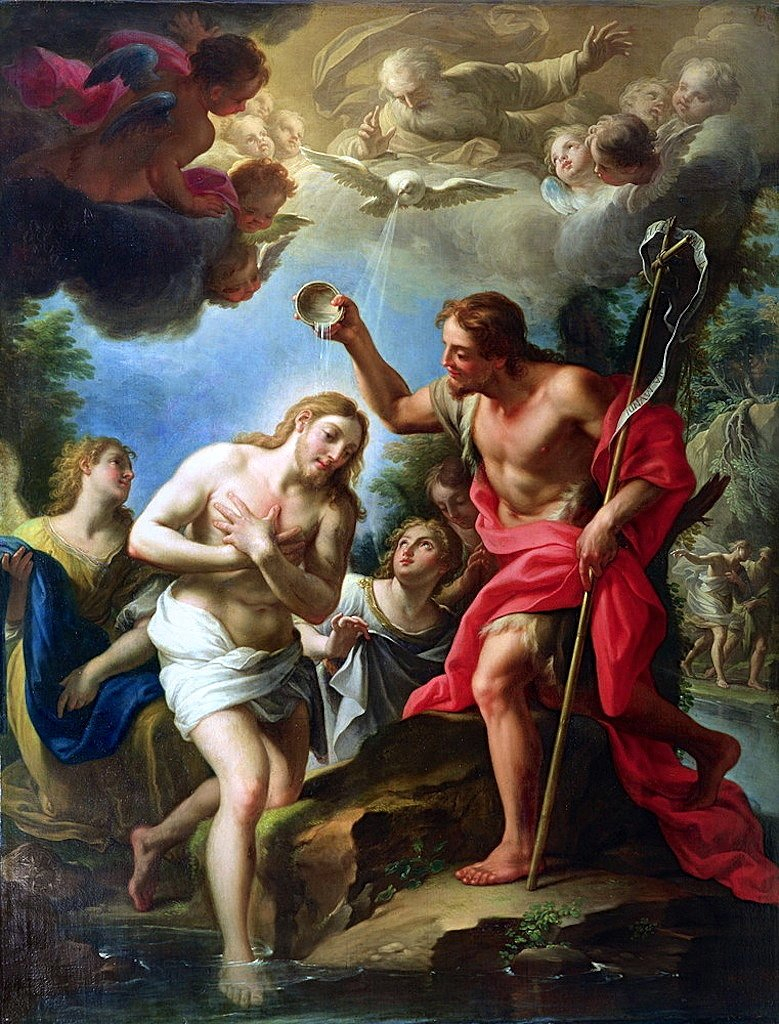
            You are helpless — and — Jesus has saved you.  It is truly beautiful, awesome, overwhelming Good News that Jesus has done it all for you and has given you that gift.  You have the peace which is beyond understanding knowing you have been declared righteous by the Son of God because… John 8:36 (ESV) 36 … if the Son sets you free, you will be free indeed.”  Jesus pours out His forgiveness upon you in the waters of baptism, in His Words of absolution, in His own Body and Blood given and shed for you for the forgiveness of your sins.  You are His.

            This Reformation Day, and every day, remember the truth.  You are truly free in Christ.  Let the joy and gladness of complete forgiveness and freedom inspire you each day as you struggle against sin and temptation in this dark world, and as you love and serve others with love and service that flows from the joy of freedom. The Son has set you free.  You are free indeed.  Amen. 

Are You the Israel of God?

WORSHIP VIDEO LINK (linked after 10:45 AM Service)

WORSHIP AUDIO LINK

SERMON AUDIO LINK

BULLETIN

SERMON TEXT BELOW

Nineteenth Sunday After Pentecost
Immanuel Lutheran Church, Hamilton, Ohio
Vicar Daniel English
October 19, 2025 
Proper 24 C – Genesis 32:22-30; 2 Timothy 3:14-4:5; Luke 18:1-8

Sermons online: 
Text and Audio:         immanuelhamiltonchurch.com   click “sermons”
Text:                           pastorjud.org   
Audio:                         pastorjud.podbean.com 
itunes:                         bit.ly/pastorjud
Full Service Audio:    bit.ly/ImmanuelWorship

Are You the Israel of God?

Remember that really big mistake that you made all those years ago? That foolish thing you said, that faithless thing you did? Just the thought of it sinks your heart into your stomach for shame. What is left in the wake of your foolishness? – anger and broken relationships. Now you think it’s best to just forget about it. Live your life, move on, let bygones be bygones. If only back then you had the wisdom and maturity that you have now.. things would have gone so much differently… you today would have done things very differently than you back then.. And everybody would understand that, wouldn’t they? You can’t take it back, as much as you’d like to, you can’t change what you’ve done.. Maybe you can forget about it and just go on with your life. But now, you’ve just been told that the one person who knows best what you’ve done is on his way right now to meet with you. What does he want? What does he have to say to you? Is he angry? Can you possibly be forgiven? Our Old Testament lesson today is about one such man as you, Jacob.

Jacob is coming out of the land of Haran and he’s stopped at the Jabbok River, a tributary of the Jordan. He has just learned that his brother, Esau, is coming to meet him with 400 men. Jacob is greatly afraid and distressed. He’s greatly afraid and distressed because he last saw his brother, Esau, moments after stealing Esau’s blessing from their father, Isaac – a blessing of grain and wine, a blessing of strength and leadership, the very blessing from God passed down from Abraham to Isaac… a blessing that Isaac intended for his firstborn son, Esau. Jacob tricks his father, Isaac, into blessing him instead, and Esau is left to receive a much inferior blessing, “Behold, away from the fatness of the earth shall your dwelling be, and away from the dew of heaven on high. By your sword you shall live, and you shall serve your brother; but when you grow restless you shall break his yoke from your neck” (Genesis 27:39b-40). This is a blessing nearly opposite to the blessing that Jacob had received. It sounds more like a curse than a blessing. Jacob and Esau’s relationship was always characterized by struggle, right from the beginning when they shared a womb, but this was the breaking point. Esau swears, “I will kill my brother Jacob” (Genesis 27:41b). Esau’s vow to kill his brother Jacob are the last words Scripture records Esau speaking up to this point. Jacob flees in fear of his brother’s wrath to his mother’s hometown of Haran. He doesn’t return until 20 years later, and now he is going to come face-to-face with his past… face-to-face with his brother and his brother’s army of 400 men.

“Greatly afraid and distressed” (Genesis 32:7). This is how the Holy Spirit describes Jacob in this moment, greatly afraid and distressed. All those years ago he crossed the river with nothing but his staff, and now, he prepares to cross back over with many servants, oxen, donkeys, flocks… with his two wives and his eleven sons. Jacob looks over his many blessings and considers the cost he will have to pay. What of all this that the Lord has given to him, will the Lord see fit to take away? He splits his belongings into two camps. “If Esau comes to attack the one camp,” he thinks, “then the other camp can escape” (Genesis 32:8). Jacob is distressed… and greatly afraid.

Fear and distress! If you can believe it, this is the beginning of the most precious gift that God gives to Jacob. This is the blessed contrition that precedes justification. This is a gift from the Holy Spirit. Jacob prays, “O God of my father Abraham and God of my father Isaac, […] I am not worthy of the least of all the deeds of steadfast love and all the faithfulness that you have shown to your servant. […] Please deliver me from the hand of my brother, from the hand of Esau, for I fear him, that he may come and attack me, the mothers with the children. But you said, ‘I will surely do you good, and make your offspring as the sand of the sea, which cannot be numbered for multitude’” (Genesis 32:9-12). What has happened here? The man who once thought himself worthy enough of his father’s blessing to steal it from his brother, now considers himself unworthy of even the least of all the things that God has done for him. And yet, he still seeks good from God. Why? Because God has promised to do good to him… to be gracious and merciful to Jacob, a sinner. This is the gift of repentance and faith. When you look at your own works, by faith you see only what it is that got you into the mess that you’re in. When you pray for the Lord to forgive and deliver you, you know that “[you] are neither worthy of the things for which [you] pray, nor have [you] deserved them, but [you] ask [your Father in heaven] that He would give them all to [you] by grace, for [you] daily sin much and surely deserve nothing but punishment” (Luther’s Small Catechism, Lord’s Prayer, Explanation Fifth Petition).

What else can Jacob do? Jacob arranges for gifts of animals to be sent to his brother, Esau. Goats, and rams, and camels, and cows, and donkeys. Jacob thinks, “I may appease [Esau] with the present that goes ahead of me, and afterward I shall see his face. Perhaps he will accept me” (Genesis 32:20b). Like Jacob, you can fall into the temptation of trying to make satisfaction for your sins. To try to appease the Lord you arrange for offerings to go ahead of you: your prayer and devotion… your money and your service. What need does the mighty hunter, Esau, the commander of the Edomite army, have for Jacob’s train of animals? And what need does the Almighty God, the Ancient of Days and the King of the Universe, have for all your works and effort? What can you possibly do to appease the wrath of God?

Before Jacob sees the face of Esau, he meets Another face-to-face, and here is where our Old Testament reading begins. Jacob sends his family across the ford of the Jabbok River and stands alone, separated from all that he has. Left alone, distressed and greatly afraid, this is where Jacob is encountered by the preincarnate Christ. Jacob will later say of this encounter, “I have seen God face to face, and yet my life has been delivered” (Genesis 32:30b). The text reads, “And Jacob was left alone. And a man wrestled with him until the breaking of the day” (Genesis 32:24). Jacob wrestles with our Lord until the next morning. Our Lord puts Jacob’s hip socket out of joint, but Jacob doesn’t let go. Jacob is convicted of his sins… he knows he is unworthy, and yet he has been given the faith that looks only to the Word and Promise of God for salvation. Jacob says to our Lord, “I will not let you go unless you bless me” (Genesis 32:26b). And then, like his father’s father, Abraham, the Lord blesses Jacob with a new name.

You know the name…, “Israel.” It comes from the Hebrew roots SARAH: to contend, strive, or persist… and EL: God. God gives this name to Jacob to commemorate his striving with Him there on the banks of the Jabbok river, but also to mark Jacob as one who has graciously been given the privilege to wrestle with God, to fervently seek – and receive – forgiveness and blessing from the Lord.

By inspiration of the Holy Spirit, the name “Israel” will be uttered by the prophets, the psalmists, the evangelists, and the apostles over 2,500 times. The name that was initially given to one man, Jacob, will eventually refer to his children, then to a nation of his offspring, and in the fullness of time the promise and blessing given to Israel is fulfilled in the person of Jesus Christ. Now, through the one man, Jesus Christ, Israel – as you know it – has come to refer to Christ’s Church… to all believers… to you. Paul writes to the Romans: “[N]ot all who are descended from Israel belong to Israel, and not all are children of Abraham because they are his offspring […] [I]t is not the children of the flesh who are the children of God, but the children of the promise are counted as offspring” (Romans 9:6-8). And to the Corinthians: “For all the promises of God find their Yes in [Jesus Christ]” (2 Corinthians 1:20).

The next morning, as Jacob limped along, he saw Esau coming, his 400 men with him. “Esau ran to meet [Jacob] and embraced him and fell on his neck and kissed him, and they wept” (Genesis 33:4). Jacob discovered that Esau had no need for his gifts; he and his men were not set on battle. Instead, they were a convoy of grace and mercy and peace.

So, what can you possibly do to appease the wrath of God? What can you do to avoid his righteous punishment? One day you will stand before the Lord Christ, the Almighty and Righteous Judge, He is the one who knows best all that you have done in thought, and word, and deed. And on that day you will see that He does not condemn you. On that day you will see that the devil is a liar. All your foolish and faithless deeds were forgiven long ago. Christ, with His holy, precious blood and with His innocent suffering and death, has purchased and won you from all sins, from death, and from the power of the devil. You were baptized, you were sealed with the name of the Triune God and all of your sins are washed away. Repent and believe the Gospel, you are the Israel of God, “[a]nd he [has] redeem[ed] Israel from all his iniquities” (Psalm 130:8). “Peace be upon Israel” (Psalm 125:5b). In the Name of Jesus. Amen.

Where is God?

WORSHIP VIDEO LINK (linked after 10:45 AM Service)

WORSHIP AUDIO LINK

SERMON AUDIO LINK

BULLETIN

SERMON TEXT BELOW

Pentecost 18 2025 Proper 23
Immanuel Lutheran Church, Hamilton, Ohio
Pastor Kevin Jud
October 12, 2025
Ruth 1:1-19a, 2 Tim. 2:1-13, Luke 17:11-19

Sermons online: 
Text and Audio:         immanuelhamiltonchurch.com   click “sermons”
Text:                           pastorjud.org   
Audio:                         pastorjud.podbean.com 
itunes:                         bit.ly/pastorjud
Full Service Audio:    bit.ly/ImmanuelWorship

            Where is God? God appears to Abraham as one of three visitors bringing him and Sarah the promise of the birth of Isaac.  God wrestles with Jacob.  God appears to Moses in a burning bush that is not consumed. 

            As the Israelites leave slavery in Egypt the Lord is with them as a pillar of fire by night and a pillar of cloud by day.  The children of Israel build the tabernacle and God dwells with His people in the tabernacle and then later in Solomon’s Temple. God is with His people in the Temple in Jerusalem.  The cloud of God’s glory is there in the Temple.  If someone asks, “Where is God?” The answer is, “He is in the Holy of Holies in the Temple in Jerusalem with the Ark of the Covenant.”

            Later… that answer changes.  Due to the wickedness of the children of Israel, the Temple is destroyed in 586 BC by the Babylonians and the Ark of the Covenant disappears.  In exile in Babylon, Ezekiel has a vision of the presence of the Lord departing from the Temple.  After this, the question, “Where is God?” does not have a clear answer. 

Under authority of the Persians, the Temple is rebuilt by Zerubbabel starting in 536 BC and then is greatly expanded by Herod the Great starting in 19 BC.  But the Ark of the Covenant never comes back to the Temple and the cloud of God’s glory never returns.  Ezekiel has a later vision of the glory of the Lord returning to the Temple from the East.  For the Jewish people after the Babylonian exile, there is no good answer to the question, “Where is God?”  Just that He is up in heaven and we are waiting for Him to return.

            We are in this time after the exile when we hear about ten lepers in the border region between Samaria and Galilee.  Lepers are forbidden to be close to others and must live outside of towns and villages and cry out, “unclean”, if someone gets near. These ten have heard about Jesus’ miraculous healing powers and instead of crying out, “unclean,” they lift… “Luke 17:13 (ESV) 13 … up their voices, saying, “Jesus, Master, have mercy on us.”  They have faith that Jesus can heal them and He does just that.  Luke 17:14 (ESV) 14 When [Jesus] saw them he said to them, “Go and show yourselves to the priests.” And as they went they were cleansed.”  The ten had faith that Jesus could heal them and they received healing through His Word. Nine do just as Jesus instructs and go to show themselves to the priests to be declared officially clean, but one of the former lepers understands what just happened.  One knows the answer.  Through the power of the Holy Spirit, one knows the answer to the question, “Where is God?”  God is standing right in front of him.  Luke 17:15–16 (ESV) 15 Then one of them, when he saw that he was healed, turned back, praising God with a loud voice; 16 and he fell on his face at Jesus’ feet, giving him thanks. Now he was a Samaritan.”  Where is God? Jesus is God.  The Samaritan is lying at Jesus’ feet worshipping and praising God. 

            Now looking at this scene it does not make sense. The man is worshiping God, but Jesus does not look like God.  Jesus does not have a cloud of glory surrounding Him. He does not appear to be God…but He is God.  He is Immanuel, God with us. 

            This former leper is a Samaritan.  Samaritans are the descendants of those left behind by the Assyrians when they conquered the ten northern tribes of Israel in 722 BC.  The Jewish remnant intermarried with the Assyrians who came into the conquered land.  They built a temple on Mount Gerizim and worship there.  The Jews worship in Jerusalem and consider the Samaritans to be impure and not God’s people.

            Luke 17:17–18 (ESV) 17 Then Jesus answered, “Were not ten cleansed? Where are the nine? 18 Was no one found to return and give praise to God except this foreigner?” Jesus is clearly showing that true knowledge of His identity is not restricted to the Jews but is for all people, even those the Jews hate. 

            Jesus addresses the Samaritan.  Luke 17:19 (ESV) 19 …“Rise and go your way; your faith has made you well.” 

            This verse can be translated in various ways.  It is a little odd for Jesus to say, “your faith has made you well”, because all of the other lepers were also made well.  What is different about this one? 

            In Luke 7, at a dinner at a Pharisee’s house, a woman, known to be a sinner, cleans Jesus’ feet with her tears and her hair, and anoints His feet with ointment and kisses.  After teaching the Pharisees that those who are forgiven much, love much, Jesus concludes by telling the woman Luke 7:50 (ESV) 50 … “Your faith has saved you; go in peace.”  This is the same Greek words Jesus uses toward the former leper. 

            The Greek word here can mean both “restore to health” or “to save.”  Here, with the Samaritan, I believe Jesus is saying your faith has saved you, for this man knows who Jesus is.  He knows where God is found. 

And also, the word the ESV translates as “go your way” can also be translated as “come” or “journey.”  Jesus may not be sending him on his way, but rather inviting the man to journey with Him to Jerusalem to see God’s presence reenter the Temple from the East as Jesus rides into Jerusalem on Palm Sunday.  And to see “God with us” arrested and abused and crucified and buried, and to hear that the curtain in the Temple is torn in two.  He would be there with the followers of Jesus on that awful Saturday wondering what has just happened to the one who is God in flesh.  He would be there to see “God with us” raised from the dead and appear to many and then ascend into heaven. 

            This one former leper, a foreigner, understands where God is and worships Jesus, giving praise to God.  He knows the answer to the question, “Where is God?”  Jesus is God.  The Kingdom of God is at hand.

            Today you still ask the question, “Where is God?”  Jesus has ascended into heaven to sit at the right hand of God the Father Almighty and you wait for Him to return in glory. Where is the right hand of God? It is everywhere.  God is everywhere and God also lives in you.  As a baptized child of God you have the Holy Spirit dwelling in you.  Your body is a temple of the Holy Spirit who gives you faith to believe that Jesus is your Lord and Savior and trust that His blood covers all your sins.  St. Paul writes in a prayer for the Ephesians… Ephesians 3:16–19 (ESV) 16 that according to the riches of his glory he may grant you to be strengthened with power through his Spirit in your inner being, 17 so that Christ may dwell in your hearts through faith—that you, being rooted and grounded in love, 18 may have strength to comprehend with all the saints what is the breadth and length and height and depth, 19 and to know the love of Christ that surpasses knowledge, that you may be filled with all the fullness of God.”

This one former leper, a foreigner, understands where God is and worships Jesus, giving praise to God.  He knows the answer to the question, “Where is God?”  Jesus is God.  The Kingdom of God is at hand.

            Through the power of the Holy Spirit, Jesus dwells in your heart and you are filled with the fullness of God.  “Where is God?”  He is everywhere… and He is in you.  “Where is God?”  You find Jesus in the Word of God.  You find Jesus in your gathering together as the Body of Christ.  “Where is God?”  You are sealed in the name of God in your baptism.  Jesus has promised to come to you in His Body and Blood in, with and under the bread and wine of Holy Communion.  God is here today, for you, for the forgiveness of your sins. 

            Forty days after His resurrection Jesus ascended into heaven and you await His return on the Last Day, but He has not abandoned you. Jesus very much remains Immanuel, God with us, in His presence in your heart, in your fellowship together as the Body of Christ, in His Word, and in His Body and Blood. 

            “Where is God?”  He is here, for you.  Amen. 

You Cannot Have Two Masters

WORSHIP VIDEO LINK (linked after 10:45 AM Service)

WORSHIP AUDIO LINK

SERMON AUDIO LINK

BULLETIN

SERMON TEXT BELOW

Pentecost 16 2025, Proper 21
September 28, 2025
Immanuel Lutheran Church, Hamilton, Ohio
Pastor Kevin Jud
Amos 6:1-7, 1 Timothy 3:1-13, Luke 16:19-31

Sermons online: 
Text and Audio:         immanuelhamiltonchurch.com   click “sermons”
Text:                           pastorjud.org   
Audio:                         pastorjud.podbean.com 
itunes:                         bit.ly/pastorjud
Full Service Audio:    bit.ly/ImmanuelWorship

            Marla is very happy to have finally gotten a job at the local supermarket.  She will be a cashier, and be stocking shelves.  For cashiering Marla reports to Susan the cashier manager.  For stocking shelves she reports to Bill the product manager. 

            After her training period Marla shows up a little early on her first regular day and sees Bill as she punches in.  “Go ahead and stock the store brand cereals first thing today.”  Bill tells her.  “Okay”, Marla replies and pulls a pallet full of cases of cereal out to the aisle. 

            After 15 minutes, Susan comes up to Marla and tells her to leave everything and immediately open up register three.  So Marla heads up to register three and begins ringing up customers.

            Thirty minutes later Bill comes up to Marla and sternly asks her, “What are you doing up here?  I told you to stock the shelves.”

            Marla replies, “But Susan told me to come up here.”

            “I don’t care what Susan wants.  You do what I say.” And Marla heads back to the cereal aisle.

            Ten minutes later Susan is calling Marla on the intercom. Marla heads to the service desk. “Where did you go?” Susan demands.

            “Bill told me to get back to stocking shelves.”

            “I don’t care what Bill wants.  You do what I tell you to do.”

            Marla has a problem.  She has two bosses and you cannot have two bosses because you do not know which one to obey.

            You cannot have two bosses.  You cannot have two masters.  Just prior to our Gospel text Jesus tells the money-loving Pharisees, Luke 16:13 (ESV) 13 No servant can serve two masters, for either he will hate the one and love the other, or he will be devoted to the one and despise the other. You cannot serve God and money.”

            In our Old Testament lesson and in our Gospel lesson today we see people who are ruled by money.  Money is their master.  In Amos the people of Israel have turned away from God and are living in great luxury; living a life of ease while the destruction of the Northern Kingdom lays just over the horizon. 

            In our Gospel reading we have Jesus telling a parable, or maybe a story, we’re not sure which, about a rich man who lives in great luxury.  Now we can get distracted in this story by the details and think Jesus is teaching about what heaven and hell are like; or teaching about how we should care for the poor. But in this account, the details are not the main point and shouldn’t distract us. 

Jesus tells about a rich man who wears extremely costly purple cloth and, from the way it sounds, not just on special occasions, but every day.  Under the purple robes he wears fine linen cloth. He feasts sumptuously every day. And feasting every day means he is not giving his servants a Sabbath rest; the rich man cares about himself — not about God’s commands.

            In stark contrast to the rich man inside, outside we find Lazarus, whose name means, “The one who God helps.”  

            The Rich Man inside is dressed in purple robes with fine linen undergarments.  Lazarus is barely dressed in rags, if anything; his sores exposed for all to see.

            The rich man feasts sumptuously every day. Lazarus hopes for a scrap from the table.

            Lazarus cannot walk but is laid in front of the rich man’s gates each day and the rich man knows of Lazarus and his situation. But the rich man has no compassion. He doesn’t care for Lazarus.  He doesn’t give Lazarus something to wear. He doesn’t invite Lazarus to eat at his table.  He doesn’t even send his table scraps to Lazarus.  The rich man ignores poor Lazarus lying at his gate.

            The local dogs have more compassion on Lazarus then the rich man.  The dogs pay attention to Lazarus and do what they can for him, licking Lazarus’ sores to try to bring healing. 

            The rich man’s master is money.  He loves money.  His focus is money.  His life’s purpose is to make himself more comfortable and pander to every one of his own selfish desires. 

            Lazarus is hungry and wretched and lonely and ignored. But he knows that God is his master. We know this because when Lazarus dies he is carried by the angels to Abraham’s side.  It appears that Abraham throws a feast to welcome Lazarus and Lazarus is reclining next to Abraham the same way the disciple John does with Jesus at the last supper.  Lazarus is brought from wretchedness to a banquet at Abraham’s side.

            The rich man is brought from a banquet to wretchedness. The rich man dies and is in torment in Hades.  And he looks up and sees Lazarus, the formerly wretched little beggar reclining at the banquet with Abraham.  And the rich man, who ignored Lazarus, now begs for Abraham to send Lazarus to bring him a drop of water.  But that is impossible; a great chasm has been fixed.

            So the rich man asks Abraham to send Lazarus as a messenger to the rich man’s brothers — to warn them so they can avoid the same fate.

            Abraham tells the rich man that his brothers have Moses and the prophets (including Amos) to listen to. 

            The rich man did not listen to Moses and the prophets and he’s pretty sure his brothers won’t either.

            “No, father Abraham, but if someone goes to them from the dead, they will repent.”  In the Gospel of John we have another Lazarus who rises from the dead.  And we have Jesus who dies and rises from the dead. Would having someone rise from the dead really bring people to repent of having money as their master?

            Abraham replies, “If they do not hear Moses and the Prophets, neither will they be convinced if someone should rise from the dead.”

            The rich man worries that there is no hope for his brothers because they too have money as their master.  There is certainly no hope for the rich man; it is too late for him. Having money as his master sealed his fate forever in hell.  This is a stern warning.  No servant can serve two masters…You cannot serve God and money.”

            You know who Jesus is.  You know Jesus came to earth as that baby born in Bethlehem.  You know He lived the perfect life and took on your sin.  You know He carried your sins to the cross at Calvary and paid the price for them with His own suffering and death.  You know Jesus rose from the dead.  You know this to be true.  You know a man returned from the dead and He is your Lord and master. You know the truth, but the danger is that you live among a people who have money as their master and it is far too easy to slip into their way of life.

            Each day ask yourself, who is my master?  Who is my boss?  Is Jesus my Lord, or do I take my direction from the love of money?

            Love of money is a great danger for all; rich or poor.  We live in a land of abundance surrounded by advertising that relentlessly wants to convince you that you deserve more, more, more.  You deserve the best.  You deserve to have your every desire fulfilled.  You deserve it.  It is very easy to get a good case of the gimmes.  “Gimme this gimme that.”  Little children can get a case of the gimmes when shopping with parents or grandparents.  Teenagers can get the gimmes when just regular clothing and shoes isn’t enough. For my generation it was having the right kind of Levi’s jeans with the little orange tag on the back pocket and the right little alligator on your shirt.  Today it is having just the right hoodie and having the holes in your brand new jeans in just the right places, or having silhouette of an elderly Chicago basketball player on your sneakers.  Adults can get a case of the gimmes as they spend money they haven’t made yet to buy things they don’t really need.  We can all get the gimmes when it comes to the latest and greatest technology.  There is a constant pressure to be discontent and to covet what others have.  It is a constant temptation to give in to the love of money.  But the love of money is the path to hell.

            The love of money is especially dangerous because you can’t just avoid money. We all need money.  You need food and shelter and clothing and transportation. You need money to live.  And money is not evil.  If you work hard and invest well you can end up having a lot of money. Money is not evil.  The love of money is evil.

In life you see the destructiveness of the love of money.  You see how people use others and step on others and destroy others to get more money for themselves.  You see how the poor are exploited by those wanting to take what little money they have. The love of money is evil.  The love of money leads so many away from God.

            And so Jesus warns.  Repent of the love of money before it is too late.  Reject money as your master and return to the Lord your God.  Jesus is your true Master.  He has purchased and won you from sin, death and the power of the devil.

            Examine how you use money and turn away from practices that are loving money and return to practices of using money in love and service to others.  Figure out ways of spending less so you can give away more.  Manage money in a way that gives glory to God rather than in ways that focus on your own indulgence. 

            Fight the tyranny of money.  The rich man wouldn’t give up his purple robes for Lazarus.  He wouldn’t give up his nice underwear.  He wouldn’t give up his feasts.  He wouldn’t give up a place at his table.  He wouldn’t even give up his banquet leftovers.  He loved all that stuff more than he loved Lazarus…more than he loved God. 

            Keep money and belongings in their proper place.  Everything you have belongs to the Lord and you are the manager of the Lord’s gifts to you.  You manage the money; the money does not manage you. Give freely and generously back to the Lord’s church to acknowledge that all you have is from the Lord.  Give to those in need.  Give to helping groups which serve those in need.

            Never acquire anything you wouldn’t be willing to give up for Jesus because Jesus is your Master; not money. 

Jesus did rise from the dead.  Jesus conquered death for you.  Jesus has taken away your sins and promises everlasting life at the banquet table with Abraham, Isaac and Jacob. 

            Like Marla at the grocery store, it does not work to have two bosses.  You can have only one master.  God?  Or money? You have answered it.  You pray to God, “Thy Kingdom come.”  You pray, God, rule me.  O Father, be my Lord and Master.  You shall have no other Gods.  You belong to Jesus…forever.   Amen.

Access to God

WORSHIP VIDEO LINK (linked after 10:45 AM Service)

WORSHIP AUDIO LINK

SERMON AUDIO LINK

BULLETIN

SERMON TEXT BELOW

Pentecost 15 2025, Proper 20
Immanuel Lutheran Church, Hamilton, OH
Pastor Kevin Jud
September 21, 2025
Psalm 113:1-9, Amos 8:4-7, 1 Timothy 2:1-15, Luke 16:1-15

Sermons online: 
Text and Audio:         immanuelhamiltonchurch.com   click “sermons”
Text:                           pastorjud.org   
Audio:                         pastorjud.podbean.com 
itunes:                         bit.ly/pastorjud
Full Service Audio:    bit.ly/ImmanuelWorship

            When my oldest son, Caleb, was a baby, Jeannette and I lived in northern Virginia and we took Jeannette’s family into D.C. for a White House tour.  On the tour we got to see a lot of the ceremonial parts of the White House.  The tour was long enough that Caleb started to cry and the secret service helped find Jeannette a quiet spot where she could feed him.  So our joke for a while was that Caleb got to eat at the White House.  It used to be that you could just line up outside and wait for a tour.  For a more in depth tour you got tickets from your congressman. 

Nowadays, in order to get a tour, you have to go through your congressman at least at least 21 days in advance giving your name, address, Social Security number and wait to be background checked and approved.  And then when you are on the tour it feels like you spend more time in security than you do inside the house. So, we stopped doing that tour on our school 8th Grade DC trips since it did not seem to be worth the time and hassle.

            There used to be just one fence surrounding the White House and the cars drove right past on Pennsylvania Avenue.  Now Pennsylvania Avenue is closed there and when we were there last week there were 4 extra barriers in place to keep people not only away from the White House, but away from the fence. 

            Last Thursday night as we were walking by, even the area behind the fence and four barriers was closed because the president was returning on Marine One from his trip to England.  The whole ellipse area was off limits and they even closed Constitution Avenue for a while to keep vehicles away from the president. 

            So what if you wanted to visit with the president? What would be the chances of getting in to see President Trump if you came up to the Secret Service booth at the White House gate and asked to be let in for a visit?  How far would you get?  The gates are locked, the guards you can see are heavily armed; not to mention the guards you cannot see; there is no way that you are going to get in.  Maybe, if you had the right connections with the right person at the right time, you might get an appointment to see the president, but otherwise, if you want to get in the White House you will have to sign up for the tour.

            Not only are there barriers up between you and the President, there are even more barriers up between you and God.  You cannot just walk up to God on your own.  You can try to walk up to God on your own but you will keep bumping, face first, into the barrier of your sin.

            In his first letter to Timothy Paul writes that he is the chief of sinners; but not only Paul, you are chief of sinners; and so am I.  And what is your chief sin?  Simply put, the chief sin is pride.  As you try to get close to God on your own terms you keep running into the wall of your pride.  Because you keep thinking, “I can do this myself.  I am good enough; I am smart enough and if I just try a little harder I can do it myself.”  You think, “I don’t need to bow down to anyone, not even God.  I don’t need to follow God’s rules; I can make up my own. I am independent.  I am good enough all by myself”…and blam…again you run face-first into the barrier of pride. 

            Often we picture pride being like a peacock arrogantly strutting his stuff.  And, oh, how we like to strut our stuff, showing off, looking down on others that we view as less than us.  In Milton’s Paradise Lost Satan is proud and says, “Better to reign in hell, than to serve in heaven.”  Your pride is a great barrier to God.  Pride refuses to speak the two hardest words in the English language, “I’m sorry,” or the three hardest words, “I was wrong.”  Or the four hardest words, “I am not perfect,” or the five hardest words, “I guess you are right.”  Or the six hardest words, “I think I need some help.”  Pride blocks your relationships with others and pride blocks your access to God because you want to stand tall on your own two feet, but that is not the way to the Father. 

            You do not get to the father by your own merit.  You cannot walk tall into eternal life because you don’t deserve forgiveness and eternal life.  You don’t deserve it; you didn’t earn it.  Jesus earned it for you on the bloody cross at Golgotha and gives you forgiveness and eternal life as a gift.  You cannot do it on your own; you need Jesus.  So you humble yourself.  You cannot get to God standing on your own two feet, so you kneel down in repentance. Humble yourself, admit you are a sinner. Have sorrow for your sins.  Repent of your sins.  Confess your sins.  Turn from your sins.  Humble yourself and find that the barrier of pride only blocks your way when you try to approach God standing tall, on your own terms.

            Do not trust in your own actions, do not trust your own good works; trust, instead, in the generosity of the master.  Trust in the generosity of God.  That is the message that we get from the strange parable of the dishonest servant.  The servant is not commended for being dishonest; we see that dishonesty is condemned in our reading from Amos.  The dishonest servant does not deserve mercy, but the servant still trusts in his master’s reckless generosity. 

            The master in the parable is recklessly generous to his servant who does not deserve it.  The servant deserves to go to jail and yet the master commends the servant for being shrewd.  The master could, simply, cancel all of the dishonest manager’s rewriting of the bills, but the master is recklessly generous.

This is the same reckless generosity that God has for you in sending His own son, Jesus, to take on your sins and pay the price for them with his own suffering and death.  You cannot earn forgiveness, you do not deserve forgiveness and yet God abundantly pours out His grace and mercy upon you through His Son Jesus in the waters of Holy Baptism.  Jesus, the God man, does what only God can do and lives a perfect, sinless life.  Jesus, the God man, does what only a man can do; bleed, suffer and die.  Jesus, the God man, God in flesh, God with us, Immanuel, bridges the barrier between God and man for you; He is the mediator between you and God; He gave Himself as a ransom for you; a ransom for all.

            We pray for all people, making supplications, prayers, intercessions, and thanksgivings, we pray for the leaders of our city, state and nation that we may lead a peaceful and quiet life, godly and dignified in every way.

            We pray for peace and quiet because this is pleasing to God who wants all people to be saved.

            God wants all to be saved.  Jesus is the mediator between God and man.  Jesus is Himself the ransom for all people.  Jesus died for you.  This is the eternal truth that we continue to proclaim here at Immanuel Lutheran Church and School.  This is the truth that we bring to the congregation and the student body and the community and to the world.  We pray for all people to come to the knowledge of the truth and humble themselves before God and receive the gifts of forgiveness, life and salvation.  We pray that all people receive the Holy Spirit and humble themselves and admit that they are sinners who need Jesus as their savior so that pride is no longer a barrier keeping them away from God.  We pray for all people to give up trust in themselves, give up trust in money, and instead, trust in the reckless generosity of the master. 

Trust in the master’s generosity.  Even though you are a struggling sinner, your sin is covered by the blood of Christ.  God lifts you up to be with Him forever in the Kingdom of Heaven. We pray that all people know that because Jesus died and rose again that all people have access to God through Jesus.  Jesus is the way to the Father.  Jesus is the way, the truth, and the life.  Jesus is the narrow door to the heavenly banquet. 

            This morning, in Washington D.C., there are still many barriers up preventing you from sitting down to talk with President Trump, but, through Jesus, there is no barrier between you and the creator of the universe.  You do not need an intermediary.  You can talk to Him directly.  You can go right to God in prayer and present your cares and concerns and thanksgivings. The Lord speaks to you in His Word. God speaks to you in our worship together to tell you, “Your sins are forgiven.  You are God’s own child, baptized into Christ.”  Amen.   

Who is the Lost Sheep? Who is the Ninety Nine?

WORSHIP VIDEO LINK (linked after 10:45 AM Service)

WORSHIP AUDIO LINK

SERMON AUDIO LINK

BULLETIN

SERMON TEXT BELOW

Pentecost 14 2025 Proper 19
Immanuel Lutheran Church, Hamilton, Ohio
Pastor Kevin Jud
September 14, 2025
Ezekiel 34:11-24, 1 Timothy 1:12-17, Luke 15:1-10

Sermons online: 
Text and Audio:         immanuelhamiltonchurch.com   click “sermons”
Text:                           pastorjud.org   
Audio:                         pastorjud.podbean.com 
itunes:                         bit.ly/pastorjud
Full Service Audio:    bit.ly/ImmanuelWorship

            Christianity is the largest religion in the world with approximately 2.5 billion people saying they are Christians.  There are many different church bodies and Christianity takes many different styles and forms and traditions.  There are so many different things going on in the name of Jesus it can become confusing as to what is the main thing.  What is Christianity all about?

            In our reading today from Luke, Jesus gives us a clear and convicting truth.  Luke 15:7 (ESV) 7 Just so, I tell you, there will be more joy in heaven over one sinner who repents than over ninety-nine righteous persons who need no repentance.”

            This statement comes at the end of the parable of the lost sheep.  So, what does Jesus mean?  Who is the one sinner who repents, and who are the ninety-nine that need no repentance? What does it mean to repent?

            This scene is one filled with tension.  Jesus is on His way to Jerusalem to be sacrificed on the cross and rise from the dead for the sins of the world.  As He journeys He teaches.  People hear the Word of God and respond.  Some respond with scoffing and ridicule and seek to discredit Jesus and destroy Him.  Others hear Jesus’ teaching and are convicted, and they come to Jesus to hear more and eat with Him.

            The Pharisees and the Scribes believe they are the good people in society and they are offended that sinners are coming to hear Jesus and eat with Him.  They grumble because sinners are convicted by the law of God and come to Jesus to receive forgiveness.  But, this is what Christianity is all about.  Sinners hear the law and gospel of God… and the Holy Spirit convicts them of their sins and points them to forgiveness in the death and resurrection of Jesus.  Christianity is all about repentant sinners receiving forgiveness of their sins.

            In response to the grumbling Jesus tells a parable to illustrate what is happening.  Luke 15:4–7 (ESV) 4 “What man of you, having a hundred sheep, if he has lost one of them, does not leave the ninety-nine in the open country, and go after the one that is lost, until he finds it? 5 And when he has found it, he lays it on his shoulders, rejoicing. 6 And when he comes home, he calls together his friends and his neighbors, saying to them, ‘Rejoice with me, for I have found my sheep that was lost.’  7 Just so, I tell you, there will be more joy in heaven over one sinner who repents than over ninety-nine righteous persons who need no repentance.”

            At the end of this short parable we have one lost sheep who is found; one sinner who repents.  Ninety-nine sheep are left in the wilderness; ninety-nine “righteous persons” who “need no repentance.”

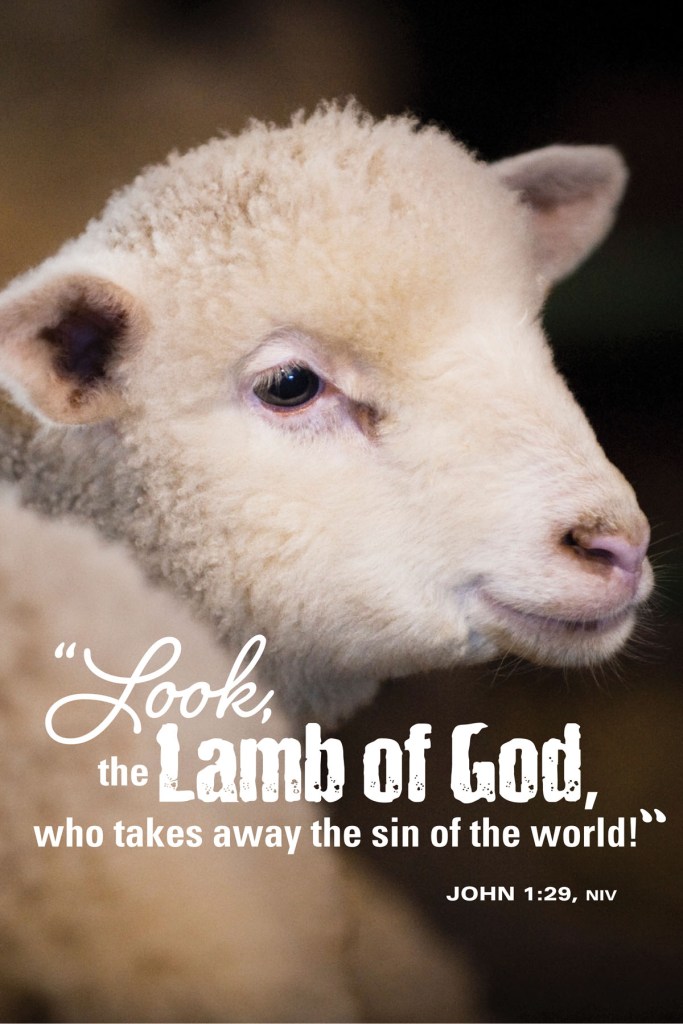
            Repentance is equal to being found.  Being found is not a work that you do but is all the work of the shepherd who finds you… and picks you up… and carries you back to celebrate. 

            The tax collectors and sinners following Jesus and eating with Him are the lost sheep who have been found.  They have heard the Word of God spoken by Jesus and have received the Holy Spirit.  The Holy Spirit convicts them of their sins and points them to Jesus as their Savior. They know they are sinners and are convicted by this knowledge.  They know they are not good enough.  They are saddened by their sin and helplessness.  They know they need Jesus so they come to Jesus.

            Jesus reaches out to the Pharisees and Scribes.  He preaches convicting law to them.  These are the ninety-nine sheep left in the wilderness because they think they are righteous persons who don’t need to repent. 

            The Pharisees are lost sheep but they will not accept that they are lost.  They will not accept that they need to repent.  They will not accept that they need a savior.  They are the sheep Ezekiel is talking about in our Old Testament reading today.  The sheep that tread down the pasture, muddy the waters, and push away the weaker sheep. They resist the Holy Spirit of God as Jesus calls them to repentance. 

            After Jesus is crucified, buried, raised from the dead and ascended into heaven, a follower named Stephen is appointed a deacon and is teaching people in Jerusalem about Jesus; bringing them God’s truth.  Some religious leaders bring charges against Stephen that he is teaching that Jesus will destroy the temple and change the customs of Moses.  So Stephen is brought before the high priest and the council and he teaches them.  He concludes his speech by calling them out for refusing the Holy Spirit, Acts 7:51–53 (ESV) 51 “You stiff-necked people, uncircumcised in heart and ears, you always resist the Holy Spirit. As your fathers did, so do you. 52 Which of the prophets did your fathers not persecute? And they killed those who announced beforehand the coming of the Righteous One, whom you have now betrayed and murdered, 53 you who received the law as delivered by angels and did not keep it.”  The religious leaders do not want to hear this and so they silence Stephen… by throwing rocks at him until he is dead.  Saul of Tarsus, later called Paul, is there… approving of the men stoning Stephen, and watching their cloaks.  Saul is a lost sheep who will not admit that he is lost.  He is an enemy of God.  This is not someone whom you would expect Jesus to go after as a lost sheep. 

            And yet, in his letter to Timothy, Paul writes about how he was brought from being a blasphemer, persecutor and insolent opponent of Christ to being a believer in Jesus because of the overflowing grace of the Lord.

            Paul is a lost sheep found by the Good Shepherd on the road to Damascus.  Jesus appears to Paul in a bright light,  Acts 9:4 (ESV) 4 And falling to the ground, he heard a voice saying to him, “Saul, Saul, why are you persecuting me?” 

            Ananias, a follower of Jesus in Damascus, is directed by God to go to Saul, and lay his hands on him to restore his sight and bestow the Holy Spirit.  Saul is then baptized and he begins to proclaim Jesus.  Jesus finds his lost sheep and carries him home to celebrate.  There is great joy in heaven.

            The Pharisees and Scribes see Jesus perform miracles that only God could do, but all they care about is that He does them on the Sabbath day; breaking their rules.  They hear Jesus’ teaching, but are only concerned that sinners are coming to hear Jesus.  They believe they are good enough.  They follow the rules that they made up.  They have given up on God and trust in themselves.

            There is a danger that you can start to trust in yourself and think you are good enough.  It is very tempting when thinking about sin to rationalize, “Well I’m not perfect, but I am not as bad as those people…those really sinful people. There is a great temptation to not admit that you were a lost sheep found by the good shepherd who has given you the gift of the Holy Spirit who convicts you of your sins and points you to the grace of Jesus poured out in Baptism, in the Word of God and in Holy Communion. 

            There is a great temptation to not talk about sin so that no one feels bad about their sin. There are so many today who claim to be followers of Jesus but do not want to talk about sin; they do not want to talk about repentance.  They do not want to talk about Jesus dying on the cross for their sins.  They want to silence God’s law so they can feel good about themselves just the way they are.  They want the church to be all about affirming them in their sin. 

            There are many in our society today who are offended by God’s law and gospel.  They reject God’s truth, and like the religious leaders who stoned Stephen, they try to silence anyone who dares to speak Jesus’ truth publicly.  This past Wednesday, the danger of speaking the truth in love was clearly shown with the assassination of conservative Christian commentator Charlie Kirk while he was engaging in civil public debate and discussion.  Lawless, disobedient, ungodly, immoral people want to silence God’s law. 

You know you were lost, but now you are found, so each day give thanks that the Good Shepherd has found you; His lost sheep. He picked you up and washed you clean and carried you home into His Kingdom where you live as a sheep in the flock of the Good Shepherd.  Despite threats and hatred, continue to speak the truth in love to bring God’s Word to a hurting world. 

            Paul writes to Timothy, Timothy 1:8–9 (ESV) 8 Now we know that the law is good, if one uses it lawfully, 9 understanding this, that the law is not laid down for the just but for the lawless and disobedient…” 

God’s law is good but they do not want to hear it.  They don’t want to hear about sin, they don’t want to admit that they are lost, they don’t want to admit they need a savior.  They are the ninety nine who believe they do not need to repent.  The Good Shepherd wants them to be found, He is reaching out to them, but too often they do not admit that they are lost.

            You know you were lost, but now you are found, so each day give thanks that the Good Shepherd has found you; His lost sheep. He picked you up and washed you clean and carried you home into His Kingdom where you live as a sheep in the flock of the Good Shepherd.  Despite threats and hatred, continue to speak the truth in love to bring God’s Word to a hurting world. 

We have been blessed as a congregation to have a number of people join our fellowship who have come out of a place of unbelief as adults.  These are lost sheep who were found by the Good Shepherd, given the Holy Spirit, and brought into the Kingdom of God.  There is great joy in heaven.

Rejoice!  You know that you were lost and now you are found.  You know that you are a sinner who needs a savior.  You know Jesus is your savior.  Praise the Lord!  Jesus found you.  Amen. 

Are You Philemon or Onesimus

WORSHIP VIDEO LINK (linked after 10:45 AM Service)

WORSHIP AUDIO LINK

SERMON AUDIO LINK

BULLETIN

SERMON TEXT BELOW

Pentecost 13 2025 Proper 18
Immanuel Lutheran Church, Hamilton, Ohio
Pastor Kevin Jud
September 7, 2025
Deut: 30:15-20, Philemon 1-21, Luke 14:25-35

Sermons online: 
Text and Audio:         immanuelhamiltonchurch.com   click “sermons”
Text:                           pastorjud.org   
Audio:                         pastorjud.podbean.com 
itunes:                         bit.ly/pastorjud
Full Service Audio:    bit.ly/ImmanuelWorship

            You have been saving for a number of years in order to make some major renovations and updates to your home.  You checked around and hired a man to do the work.  It is a big project and you have given him a very large deposit; tens of thousands of dollars.  He gets started.  The first day he demolishes the kitchen, tearing out cabinets and countertops, and appliances.  The second day… he does not show up.  You call and it goes to voicemail.  Your texts are not answered.  Day three — no contractor.  You drive by his shop at the address on his business card and it is closed up.  You look in the window and it has been emptied out. You get an awful feeling in the pit of your stomach; a mix of anger and frustration and being mad at yourself for choosing this guy.  You imagine what you would do to him if you ever see him again — and your thoughts are not pretty. 

            Years go by and you have finally gotten the kitchen back in shape by doing most of it yourself.  You never heard from the contractor, until one Sunday morning you see him sitting two pews ahead of you in church.  What is going on?  What is he doing here?

            Our epistle reading today is the book of Philemon.  Philemon is one of five books of the Bible that have only one chapter.  The recommended reading is verses 1-21, I added 22-25 to finish the book.  This is a short letter from Paul who is imprisoned in Rome, to Philemon, a Christian in Colossae, in the heart of modern day Turkey. Philemon became a Christian under Paul’s teaching and now hosts a local congregation that meets in his house. 

            In this letter we see Paul being lovingly persuasive to a fellow Christian in a difficult situation.  Paul’s writing is so wonderfully diplomatic and caring — all to help a brother in Christ who is in a tough spot.  Onesimus is Philemon’s doulos, his slave, which can also be translated servant or bondservant. Onesimus is Philemon’s slave but he has left Philemon.  Slavery during this time was a different thing than slavery practiced in North and South America and the Caribbean during the 1600, 1700 and 1800s.  At Jesus’ time someone might become a slave by being captured in warfare, because of debt, or even voluntarily becoming a slave in order to have someone to take care of them in exchange for work. 

            We do not know the circumstances of Onesimus’s servanthood.  Was he a low level servant who ran away and perhaps on his way out stole from his master? Or, was he a high level servant in charge of the household who maybe embezzled money?  We do not know.  Whatever the circumstance, Onesimus has left his service to Philemon in Colossae and made his way over 1,600 miles to Rome.  Not only did he run away, he ran a long, long way and he has been gone a long time. 

            Onesimus came into contact with Paul who is imprisoned in Rome and through hearing the Word of God from Paul, the Holy Spirit has brought Onesimus to faith in Christ and Onesimus has been serving Paul during his imprisonment.

            Now that Onesimus is a Christian, he knows he did wrong. He knows that he needs to do the right thing and return to Philemon.  But that is scary.  Philemon may be quite angry.  Onesimus could be returning to severe punishment or even execution.  So Paul writes to Philemon and in Paul’s letter you see how being a believer in Jesus is not just something for the hereafter, but very much affects the way you live together today.              Philemon has every right to be angry with Onesimus and to punish him, but Paul asks him to give up his right, and welcome Onesimus back as a brother in Christ.

            Paul begins the letter by commending Philemon for his love and faith and the sharing of his faith with others.  Philemon 7 (ESV) 7 For I have derived much joy and comfort from your love, my brother, because the hearts of the saints have been refreshed through you.”

            Paul then says that he could command Philemon to do what is right and receive Onesimus back not as a disobedient servant, but as a brother in Christ.  Paul could command, but for the sake of love, instead of commanding, he appeals to Philemon. Paul cites that he is an old man, respected for his years, and he is a prisoner for Christ Jesus; he has gone all in in service to the Gospel. 

Paul writes, Philemon 10–14 (ESV) 10 I appeal to you for my child, Onesimus, whose father I became in my imprisonment. 11 (Formerly he was useless to you, but now he is indeed useful to you and to me.) 12 I am sending him back to you, sending my very heart. 13 I would have been glad to keep him with me, in order that he might serve me on your behalf during my imprisonment for the gospel, 14 but I preferred to do nothing without your consent in order that your goodness might not be by compulsion but of your own accord.”  The name Onesimus means “useful” so Paul is using the play on words here that Onesimus was useless but is now useful.

Paul then reasons that God may be working much good out of a bad situation and this may be why Onesimus left for time so that he could return as a baptized child of God, a new creation in Christ to be so much more than just a servant. He implies that Philemon should forgive Onesimus for running away and welcome him back.

This is sort of a prodigal son situation, except the prodigal son returns to his father asking to be a servant.  This is a servant who returns to his master and Paul is asking the master to treat him as a brother. Onesimus will still be Philemon’s servant, but not only a servant — also a brother in Christ to gather together to hear God’s Word and receive the Sacrament.  Paul writes, Philemon 17 (ESV) 17 So if you consider me your partner, receive him as you would receive me.” 

And then, modeling his actions after Christ paying our debt and covering our sin, Paul offers to cover anything that Onesimus owes to Philemon. Paul writes that sentence in his own hand to confirm that it is really him saying this, but then Paul does note that Philemon owes his salvation to Paul for having brought him the truth of the Gospel.  Paul calls in a favor.  Philemon 20 (ESV) 20 Yes, brother, I want some benefit from you in the Lord. Refresh my heart in Christ.”

            Paul concludes with the assumption that Philemon will do the right thing.  Philemon 21 (ESV) 21 Confident of your obedience, I write to you, knowing that you will do even more than I say.”

            Paul then asks Philemon to prepare a room for Paul to visit.  If Paul is able to visit, he could then pay whatever Onesimus owes and enjoy fellowship in Christ with both Philemon and Onesimus and they could encourage each other in the Gospel of Christ. 

            Being a follower of Jesus changes things…right now. Your relationship with others is changed.  You love and serve and forgive fellow Christians as your brothers and sisters in Christ.  You humble yourself in service to others.  In Christ, everyone is equal.  Paul writes in Galatians,  Galatians 3:27–28 (ESV) 27 For as many of you as were baptized into Christ have put on Christ. 28 There is neither Jew nor Greek, there is neither slave nor free, there is no male and female, for you are all one in Christ Jesus.”

            Now, you have been watching your runaway contractor during worship wondering, what he is doing here? Why did this guy come back, and why is he here at church?  After the final hymn he comes over to you and offers you his hand.  He says, “I am so sorry for what I did to you; stealing your money and leaving you in a mess.  I have no excuse.  I was in a bad place and I was thinking only about myself.  What I did was evil.  Last year I hit rock bottom and wandered into a church on Sunday morning.  I heard the good news of forgiveness of sins.  I heard that Jesus paid the price for all the wrongs I have done.  The pastor taught me the catechism and I was baptized and joined the church.  I know that I owe you a lot of money.  I don’t have it right now, but I have moved back here and I will pay you something every month until it is completely paid off.  I am so sorry.  I know you must hate me and be so angry for what I did, but I pray that you can forgive me.”  What do you do?  How do you treat a brother in Christ who has wronged you? 

            Paul is calling on Philemon to forgive Onesimus and receive him as a brother in Christ the same way Philemon would receive Paul. Onesimus likely will resume his position as servant to Philemon, but now also as a brother.  In his accompanying letter to the Colossians Paul addresses the relationship of bondservants and masters.  Colossians 3:22–24 (ESV) 22 Bondservants, obey in everything those who are your earthly masters, not by way of eye-service, as people-pleasers, but with sincerity of heart, fearing the Lord. 23 Whatever you do, work heartily, as for the Lord and not for men, 24 knowing that from the Lord you will receive the inheritance as your reward. You are serving the Lord Christ.” And…Colossians 4:1 (ESV) 1 Masters, treat your bondservants justly and fairly, knowing that you also have a Master in heaven.”

            Paul sends his letter to Philemon with Tychicus and Onesimus who make their way all the way back to Colossae 1,600 miles east. Along with the letter to Philemon the two carry Paul’s letter to the Colossians; the Christians gather in Colossae, in Philemon’s house and perhaps in other houses.  The two letters go together to teach how we are to live in Christ.

            God has every right to punish you for your sins, but He gave up that right, and instead punished Jesus.  As a follower of Jesus, when someone does you wrong you have the right to get even, but you give up that right because of what Jesus did for you. This is a radical way of living in this “eye for an eye” world.  You live this way because, like Paul covers Onesimus, Jesus covers you.  He has forgiven you all your sins and changed you from a slave to sin to His holy, righteous brother so you can love others with His love with which He first loved you. Living in Christ changes everything. Amen. 

Humble Yourself, God Exalts

WORSHIP VIDEO LINK (linked after 10:45 AM Service)

WORSHIP AUDIO LINK

SERMON AUDIO LINK

BULLETIN

SERMON TEXT BELOW

Pentecost 12 2025 Proper 17
Immanuel Lutheran Church, Hamilton, Ohio
Pastor Kevin Jud
August 31, 2025
Proverbs 25:2-10, Hebrews 13:1-17, Luke 14:1-14

Sermons online: 
Text and Audio:         immanuelhamiltonchurch.com   click “sermons”
Text:                           pastorjud.org   
Audio:                         pastorjud.podbean.com 
itunes:                         bit.ly/pastorjud
Full Service Audio:    bit.ly/ImmanuelWorship

            Going back to school is difficult.  During the summer, kids can somewhat choose who they spend time with, mostly their own family who loves them unconditionally, even if their siblings don’t always show it, but school can seem like it is filled with people who are just looking for you to make a mistake; to do something stupid or say something stupid or just be different somehow so they can make fun of you for it.  There is a lot of pressure to conform to whatever the other kids are doing so you are not left out.  School can be rough because it seems like it is filled with people looking to humiliate you and it does not feel good to be humiliated.  And this kind of humiliation is not just limited to schools.  It can happen at work, on sports teams, at the gym, even in families.  There are many out there using humiliation as a weapon against you.  Your battle against the possibility of humiliation can lead you to try to exalt yourself to protect your pride and dignity.  Exalting yourself is a defense strategy against humiliation.  People work hard to achieve higher social status and protect that status. 

            Social status was especially important in Jewish culture at Jesus’ time.  There was a hierarchy of people.  Each had a status in relation to others; there were those who were more powerful and important, and lesser people who were not powerful or important.  Higher status meant more privileges so people were always vying to move up the ladder.

            In our Gospel reading from Luke, the Pharisees have set the scene for Jesus.  They are hosting a big, fancy Sabbath dinner for the important people in town and they invited Jesus to speak after the dinner and then they would have a discussion. Reclining couches surround the table with the most important people towards the center and the less important people further away.  The couches are ready, the table is ready, wine is being served, you can smell the food in its final preparation. 

It all sounds like such a wonderful event, except, the whole thing is a set up so they can trap Jesus in a Sabbath violation.  Everything is set for dinner, people are all in their places and now the Pharisees launch their trap.  Luke 14:2 (ESV) 2 And behold, there was a man before him who had dropsy.”  Dropsy is a buildup of fluid in your body.  We also call it an edema.  It is not a coincidence that this man with dropsy is there.  The Pharisees set this all up.  They want to test Jesus to see if He will “do work” on the Sabbath day and break the Pharisee’s enhanced Sabbath rules so then they can discredit Him and destroy Him. 

            Jesus knows what they are up to and that this is the reason for their whole gathering so He asks them a question.  Luke 14:3 (ESV) 3 …“Is it lawful to heal on the Sabbath, or not?”  Healing someone with a serious ailment is certainly a good, merciful thing to do, but the Pharisees are not looking to do good or to show mercy.  They are looking to trap Jesus.  Their hatred and anger at Jesus blinds them to the big picture that Jesus heals people just by speaking.  Jesus has the power of God.  He is able to work incredible miracles.  Instead of rejoicing that the Messiah has come, they look to eliminate Jesus.  Jesus asks a simple question and they refuse to answer.  They just remain silent.  This is a very awkward dinner discussion group.  So Jesus heals the man and sends him away.

            Then Jesus asks, Luke 14:5 (ESV) 5 …“Which of you, having a son or an ox that has fallen into a well on a Sabbath day, will not immediately pull him out?”  Ahh…a thought provoking question.  How would they handle it if their child or farm animal was in peril on the Sabbath?  Maybe this will lead to a lively discussion…but they do not reply.  They could not reply to these things because they would have to admit that they would help their child or their animal, but they want to say Jesus should not help those in need on the Sabbath.  Jesus has trapped them and so they remain silent. 

            Since no discussion is forthcoming Jesus continues to teach them.  He observed how when arriving at the dinner they chose places of honor trying to put themselves in the most important position, so He tells them a story.  Luke 14:8–10 (ESV) 8 “When you are invited by someone to a wedding feast, do not sit down in a place of honor, lest someone more distinguished than you be invited by him, 9 and he who invited you both will come and say to you, ‘Give your place to this person,’ and then you will begin with shame to take the lowest place. 10 But when you are invited, go and sit in the lowest place, so that when your host comes he may say to you, ‘Friend, move up higher.’ Then you will be honored in the presence of all who sit at table with you.”

            Jesus is calling out the Pharisees for all their concern about social status as they each try to improve their place and make themselves appear to be better. 

            Now, taken wrongly, this can be heard as Jesus teaching you to be manipulative and aiming to get a better seat by shrewdly choosing the lower seat, but that is not what Jesus is teaching.  He summarizes, Luke 14:11 (ESV) 11 For everyone who exalts himself will be humbled, and he who humbles himself will be exalted.” 

            This is a consistent teaching; the humble will be exalted.  We see this throughout the Gospel of Luke all the way back to Jesus’ incarnation in the womb of Mary who proclaimed, Luke 1:46–49 (ESV) 46 …“My soul magnifies the Lord, 47 and my spirit rejoices in God my Savior, 48 for he has looked on the humble estate of his servant. For behold, from now on all generations will call me blessed; 49 for he who is mighty has done great things for me, and holy is his name.”

            We see this later in Luke in the parable of the tax collector and the Pharisee.  Luke 18:9–14 (ESV) 9 He also told this parable to some who trusted in themselves that they were righteous, and treated others with contempt: 10 “Two men went up into the temple to pray, one a Pharisee and the other a tax collector. 11 The Pharisee, standing by himself, prayed thus: ‘God, I thank you that I am not like other men, extortioners, unjust, adulterers, or even like this tax collector. 12 I fast twice a week; I give tithes of all that I get.’ 13 But the tax collector, standing far off, would not even lift up his eyes to heaven, but beat his breast, saying, ‘God, be merciful to me, a sinner!’ 14 I tell you, this man went down to his house justified, rather than the other. For everyone who exalts himself will be humbled, but the one who humbles himself will be exalted.” 

Your value is not from what you have, but who you are in Christ.  Your value is not based on your social status. It is not based on what you have done. It is not based on your achievements. Your value is in what Jesus has done for you.  Jesus has washed you clean in the waters of baptism and made you His saint.  Jesus paid the price for your sins on the cross and has given that to you as an undeserved gift.  Worldly glory evaporates at the cross of Christ where we see Jesus’ glory in His horrible suffering and humiliation outside the walls of the city where they would burn the carcasses of sacrificed animals from the temple. 

            Conditioned by the world we can look for the glory of God in the wrong places.  We can look for glory in things that the world values, but that is not where God’s glory is found.  God’s glory is found in humble places. 

            Today we got to see humbleness in action.  Today we baptized little Gracelyn Anna into the family of God.  As precious as Gracelyn is, she has no status in life.  She has not accomplished anything.  She has not done anything to earn God’s favor.  She just receives.  Gracelyn has a place of honor at God’s table without any worldly status or accomplishment. As we watch it does not look like much. Just water, just words, but it is the glory of God claiming Gracelyn as His own.  She did not do anything to deserve this great gift so it doesn’t make sense to the world.  How can water do such great things? 

            We are people under the influence of human reason. In Article V of the Apology of the Augsburg Confession in the Book of Concord it is written.  “Human reason naturally admires works.  Reason sees only works and does not understand or consider faith. Therefore, it dreams that these works merit forgiveness of sins and justify.”

            Like the people of Jesus’ time we are programmed to look at who a person is and what they do to determine their value and status. And it was not just the Pharisees doing this.  Jesus’ disciples judged people by what they have and what they have done.  They let a rich young man come right up to Jesus, but when folks were bringing their children to Jesus the disciples rebuked them. Then Jesus rebuked them.

            Conditioned by the world we can look for the glory of God in the wrong places.  We can look for glory in things that the world values, but that is not where God’s glory is found.  God’s glory is found in humble places. 

            Mark 10:14–16 (ESV) 14 But when Jesus saw it, he was indignant and said to them, “Let the children come to me; do not hinder them, for to such belongs the kingdom of God. 15 Truly, I say to you, whoever does not receive the kingdom of God like a child shall not enter it.” 16 And he took them in his arms and blessed them, laying his hands on them.” 

As people living in this world, we are tempted to judge our standing before God based on social status, but that is not how the kingdom of God works.  You do not earn salvation, you do not deserve salvation.  It is a gift from God.  Here we are all equal.  Whether millionaire or beggar it does not matter before God.  As the note found in Luther’s pocket after he died said, “We are all beggars, it is true.” 

            Christian life is not about asserting your power and status and importance; it is about receiving from God the gift of eternal life. 

            As a Christian you do not exalt yourself and that is why you come here on Sunday.  This is not a place of exaltation.  You come here and get on your knees and plead guilty to being a sinner deserving present and eternal punishment.  You humble yourself before God and He exalts you.  Jesus forgives your sins and lifts you up and declares you to be perfect, righteous and holy.

            Entrance into the kingdom of God is not about what you have, or what you have done.  It is about what Jesus has done for you.  The almighty God and Father of our Lord Jesus Christ, who has given you the new birth of water and of the Spirit and has forgiven you all your sins, strengthen you with His grace to life everlasting.  Amen. 

Strive to Enter by the Narrow Door

WORSHIP VIDEO LINK (linked after 10:45 AM Service)

WORSHIP AUDIO LINK

SERMON AUDIO LINK

BULLETIN

SERMON TEXT BELOW

Pentecost 11 2025, Proper 16
Immanuel Lutheran Church, Hamilton, Ohio
Pastor Kevin Jud
August 24, 2025
Isaiah 66:18-23, Hebrews 12:4-24, Luke 13:22-30

Sermons online: 
Text and Audio:         immanuelhamiltonchurch.com   click “sermons”
Text:                           pastorjud.org   
Audio:                         pastorjud.podbean.com 
itunes:                         bit.ly/pastorjud
Full Service Audio:    bit.ly/ImmanuelWorship

            A number of years ago Jeannette looked around our living room and said, “It looks like we furnished this from a yard sale… nothing matches.”  Well there was a good reason it looked like that, most of it did come from a yard sale. So it was a big step for us to go to Furniture Fair and pick out a sofa and chair and choose the fabric we wanted. You don’t get to do that at the yard sale.

            In our recent move the plan was for that sofa and chair to be moved to the basement for a downstairs gathering place.  But it did not work.  The door to the basement is only 30 inches wide and no matter what the movers did they could not get the sofa through the narrow door.  So now the sofa needs to find a new home.

            In our Gospel reading today Jesus is… Luke 13:22 (ESV) 22 … on his way through towns and villages, teaching and journeying toward Jerusalem.”  In this section of the Gospel of Luke, Jesus is on His way to the cross and He teaches as He goes.  A couple of weeks ago we read about how along the way a man demands that Jesus intervene to make his brother share an inheritance and Jesus warns about covetousness. After that Jesus warns the people to stay ready; like a servant waiting for his master to return.  In last week’s Gospel reading Jesus teaches that He has not come to bring peace, but division.  After that teaching… Luke 13:1-3 (ESV) 1 There were some present at that very time who told him about the Galileans whose blood Pilate had mingled with their sacrifices.” 2 And he answered them, “Do you think that these Galileans were worse sinners than all the other Galileans, because they suffered in this way? 3 No, I tell you; but unless you repent, you will all likewise perish.”  Repent or perish. 

            Jesus then teaches about the patience of God who will cultivate and fertilize a barren tree to encourage it to bear good fruit, but if it does not… it will be cut down. 

            A little while later, in today’s reading from Luke, someone asks, Luke 13:23 (ESV) 23 … “Lord, will those who are saved be few?”…”  Jesus does not answer the question.  Jesus instead instructs and warns everyone — including the questioner… Luke 13:24 (ESV) 24 “Strive to enter through the narrow door. For many, I tell you, will seek to enter and will not be able.”

            This is a harsh warning.  Many will seek to enter and will not be able.  Not entering means eternity in hell.  Luke 13:25 (ESV) 25 When once the master of the house has risen and shut the door, and you begin to stand outside and to knock at the door, saying, ‘Lord, open to us,’ then he will answer you, ‘I do not know where you come from.’” 

            As Jesus draws near to Jerusalem and the cross His warnings grow more pointed.  Repent or perish.  Bear fruit or be cut down.  Many will seek to enter and will not be able.  This is frightening… this is convicting… you wonder, “will I be able to enter through the narrow door, or will I be left outside?”  As you examine yourself in the light of God’s law you know that you do not deserve to enter the narrow door to the heavenly banquet — and that is alarming. Eternal life is at stake and you do not deserve eternal life.  To be left outside is terrifying.  It is horrifying to think Jesus would to say to you,  Luke 13:27 (ESV) 27 … Depart from me, all you workers of evil!’”. 

There is going to be a judgment and some will enter through the narrow door to recline at table in the kingdom of God and others will go to the place where, Luke 13:28 (ESV) 28 “…there will be weeping and gnashing of teeth, when you see Abraham and Isaac and Jacob and all the prophets in the kingdom of God but you yourselves cast out.”  This is a troubling teaching.  So what does this mean to strive to enter through the narrow door? 

            It is a narrow door… and it is open… so why doesn’t everyone go through?  It is an open door, but it is humbling.  To enter you need to admit the truth about yourself.  The door is Jesus…just Jesus.  To enter through the narrow door is know that you need Jesus.  To know that you need Jesus is to know that you really are a sinner.  You need Jesus because you are a sinner and you cannot free yourself from bondage to sin.  To know you need Jesus is to know that you deserve death and hell.  To enter through the narrow door is to know that you do not belong there.  You do not deserve to enter.  It is utterly humbling to know you cannot do it.  You are a poor, miserable sinner.  You are…by nature… sinful and unclean. 

            Many will try to enter but they try to enter on their own terms.  They want to enter because they deserve it, because they have earned it, because they have done what needs to be done.  They cannot enter.  You cannot enter on your own terms.  It is not about what you have done.  So, let go of all your, “because I” reasons for salvation. Folks want to say, I know I am saved…because I am good enough.  Because I follow the rules.  Because I asked Jesus into my heart.  Because I do good works.  Because I go to this certain church.  Because I pray.  Because I read the Bible.  Because I am successful.  Because I am not as bad as those other people.  Because I…will not get you through the narrow door.  It is not about what you have done.

            Many will try to enter but they are holding on to sin. They live in sin and will not let go of it.  Sin has become a habit, a lifestyle, a part of their identity.  They make excuses for their sin.  They rationalize their sin.  They explain their sin.  They become comfortable with their sin.  They embrace their sin.  They celebrate their sin.  They are proud of their sin.  But sin cannot enter through the narrow door.

            You are a natural born sinner and sin comes quite naturally to you, but you cannot hold on to sin.  Let go of your sin.  Confess your sin.  Repent of your sin. 

Many churches teach that since Jesus instructs us to love one another, therefore we should not warn about sin and that it is evil and hateful to do so.  They are wolves in sheep’s clothing trying to drag you to hell.  We learn from our reading from Hebrews.  Hebrews 12:5–7 (ESV) 5 … have you forgotten the exhortation that addresses you as sons? “My son, do not regard lightly the discipline of the Lord, nor be weary when reproved by him. 6 For the Lord disciplines the one he loves, and chastises every son whom he receives.” 7 It is for discipline that you have to endure. God is treating you as sons. For what son is there whom his father does not discipline?” 

God takes sin seriously.  In Matthew, Jesus uses hyperbole to emphasize the seriousness of sin.  Matthew 5:29–30 (ESV) 29 If your right eye causes you to sin, tear it out and throw it away. For it is better that you lose one of your members than that your whole body be thrown into hell. 30 And if your right hand causes you to sin, cut it off and throw it away. For it is better that you lose one of your members than that your whole body go into hell.”  It is difficult and painful to give up habitual sins but better to give up the sin than to be separated from God for eternity.  Give up making money your idol.  Let go of sexual sins.  Let go of intimacy outside of marriage and online immorality.  Repent of anger and withholding forgiveness.  Confess your pride your coveting and your rebelliousness.  

            Confess your sin.  Repent of your sin.  Let go of your sin.  I wish this was a one-time process; that repentance was one time and done, but as a baptized child of God it is an ongoing struggle.  Christians struggle with sin. This is what you do as a baptized child of God.  Luther writes about this in the Small Catechism, “What does such baptizing with water indicate?  It indicates that the Old Adam in us should by daily contrition and repentance be drowned and die with all sins and evil desires, and that a new man should daily emerge and arise to live before God in righteousness and purity forever.”  In baptism you have put on Christ.  Your baptized life is a life of contrition — sadness over your sin, and repentance — turning away from sin and back to God.  Let go of your sin because sin does not belong in the kingdom of God.

            Christian life is not good for your self-esteem. Christian life is knowing that you are not good enough.  Christian life is knowing that you cannot save yourself.  It is knowing that the price of your sin is the perfect Lord Jesus, the sacrificial Lamb of God, suffering and bleeding and dying on the cross.  Your sin put Jesus on the cross.  The Christian life is lifelong struggling and striving against sin and temptation. 

The Christian life is not easy, but the great Good News is that the struggle is not to get through the narrow door.  You have already passed through the narrow door of Christ in the waters of baptism.  Jesus died on the cross and then rose from the dead to show, for certain, that He had conquered sin, death and the devil.  Colossians 1:13 (ESV) 13 He has delivered us from the domain of darkness and transferred us to the kingdom of his beloved Son, 

You are through the narrow door of Christ and you are in the kingdom of God.  You are invited to the table of the Lord for a foretaste of the feast to come.  You gather together here each week with your fellow sinners who need Jesus — and Jesus gives you His forgiveness.  You humbly enter into His presence on your knees pleading guilty of your sin and asking for mercy and grace, and Jesus gives you His mercy and grace.  He forgives you your sins.  He gives you His body and blood.  At the table of the Lord you gather with those who have gone before and are now with the Lord waiting for that last great day when Jesus will return. You gather with Abraham and Isaac and Jacob and all the prophets.  You gather with the fellow baptized from the east and west, and from north and south and look forward to the day when you no longer look through the glass dimly but will be able to see the uncountable multitude of the company of heaven in white robes waving palm branches.  Then there will be no more struggles, no more striving, no more sin, no more temptation, no more sadness or sickness or death.   

            We look forward to that day, but for now the struggle continues.  For now it is a life knowing that you do not deserve to be saved.  You cannot do it.  You are not good enough.  You need a savior — and you have a savior — and your savior has marked you as His beloved. You need Jesus and Jesus gives you what you need.  Jesus has brought you through the narrow door into the kingdom of God.  Amen. 

Consisder the Ravens

WORSHIP VIDEO LINK (linked after 10:45 AM Service)

WORSHIP AUDIO LINK

SERMON AUDIO LINK

BULLETIN

SERMON TEXT BELOW

Pentecost 9 2025 (Proper 14)
Immanuel Lutheran Church, Hamilton, Ohio
Pastor Kevin Jud
August 10, 2025
Genesis 15:1-6, Hebrews 11:1-16, Luke 12:22-34

Sermons online: 
Text and Audio:         immanuelhamiltonchurch.com   click “sermons”
Text:                           pastorjud.org  
Audio:                         pastorjud.podbean.com 
itunes:                         bit.ly/pastorjud
Full Service Audio:    bit.ly/ImmanuelWorship

            Last week Jesus gave us the example of the rich fool. A bad example to teach us how not to live.  The rich fool is very concerned about things of this life, but not thinking at all about eternal things.  The man has a good harvest and believes he is set for life, but then he dies unprepared for eternity.  The rich fool is given as an example of what not to do.  Do not measure yourself by what you have – measure yourself by who you are in Christ.

            In our Gospel reading today, the crowds are gone and Jesus is teaching His disciples about anxiety.  The disciples are like everyone else…they worry.  Folks worry, they are anxious about life.  They worry about what to eat…about what to drink…about clothing.  Life can be filled with anxiety.  Will I have enough to get through the month?  What about the future?  What about my health?  What if I make a mistake?  And life can get so busy.  You can get so caught up in all the activities of life that everyday living becomes a rat race; a competitive struggle for ultimately pointless rewards. It is easy to get caught up in a routine where you feel like a rat on a hamster wheel running and running and running and not getting anywhere.  It makes you wonder, is this what life is all about?

            Today, Jesus gives us a good example of how to live life, and it involves bird watching.  Luke 12:24 (ESV) 24 Consider the ravens: they neither sow nor reap, they have neither storehouse nor barn, and yet God feeds them. Of how much more value are you than the birds! 

            Jesus teaches you to observe and ponder ravens to learn about anxiety.  Unfortunately, for observing and pondering purposes, ravens are not found in Ohio, but further north and out west.  Ravens are related to crows, but are much larger, have a superior vocal range and are found more in the wild rather than the urban areas that crows prefer.  Crows travel in groups, called a murder. Ravens tend to travel in pairs.  Both are highly intelligent. 

Ravens are highly intelligent, but are not highly regarded.  When you think of beautiful, admirable birds you may think of eagles or hawks or cranes or herons, but not ravens.  They are not highly thought of.  A group of ravens is often called an unkindness or a conspiracy. 

            A raven’s diet is quite varied.  They eat carrion, a nice term for dead animals.  They also eat insects, rodents, eggs, berries, and even garbage.  They are omnivorous scavengers.  Ravens are not birds we would think of as being particularly beautiful.  But I think that if you were to ask the ravens, they might claim that they are misunderstood. 

Biblically, ravens are seen in different ways.  Noah released a raven first after the flood and it went to and fro around the ark, but did not return.  In Leviticus, the Lord declares ravens unclean and detestable.  The raven is detestable and unclean, and yet God sends ravens to bring bread and meat to the Prophet Elijah during a time of drought. 

            In literature, the raven is often a symbol of death, bad omens or the supernatural.  In Edgar Allen Poe’s poem, the raven is a symbol of grief and despair over the lost Lenore.  Even though Poe is from Baltimore it still seems a strange choice to name a football team after a symbol of grief and despair, except, I guess, they were renaming the Cleveland Browns. 

            Jesus tells us in the gospel reading today to consider the ravens.  Observe them and learn from them.  Last week he told us about the rich fool as a negative example.  Now we get ravens as a positive example of God’s provision.  God provides for ravens and that shows God’s power and control.  In Job, the Lord asks,  Job 38:41 (ESV) 41           Who provides for the raven its prey, 

when its young ones cry to God for help, 

and wander about for lack of food? 

And in the psalms, 

Psalm 147:9 (ESV) 9He gives to the beasts their food, 

and to the young ravens that cry.” 

            God provides for ravens and ravens trust that God will provide.  As opposed to the rich fool busy planning to tear down his existing barns and build bigger ones to store all that he has, the ravens soars high above trusting that God will give them what they need.  Ravens can glide for long periods while searching for food and can soar incredibly high on thermal air currents.  Ravens appear to be flying lazily, but they move deceptively fast and yet with slow wingbeats.  As ravens search for God’s provision they have fun.  Ravens are acrobatic flyers and often will playfully perform rolls, dives and other maneuvers.  In courtship ravens will fly with wingtips touching and will repeatedly dive and tumble together. 

            The Alaska Department of Fish and Game reports, “Ravens are among the most intelligent of all birds and can learn by watching, solve problems using logic, and recognize different individuals, human and raven. They are playful and carry sticks and feathers aloft, trade them back and forth in flight and drop and retrieve them in air; they will repeatedly slide single file down snow fields. They also interact in a playful fashion with other animals, including wolves and bears. This likely helps them when their scavenging puts them in close proximity to these predators.[1]” 

            Ravens fly around looking for food but their quest for food appears effortless and elegant and playful.  The raven is not flapping his wings nonstop constantly flitting and flying here and there, but instead calmly soars high above looking for the food God will provide. 

            Ravens live out last week’s reading from Ecclesiastes. Ecclesiastes 2:24–25 (ESV)  24 There is nothing better for a person than that he should eat and drink and find enjoyment in his toil. This also, I saw, is from the hand of God, 25 for apart from him who can eat or who can have enjoyment?”  

            Now, a raven’s life is not glamourous or easy.  Not many would consider eating roadkill to be fine dining.  But ravens are flexible.  They do not insist on just one particular food, but can eat many different things. They find joy in their daily tasks. Ravens trust God and soar and play and enjoy their toil.  Ravens do not sit on their nests with their mouths open waiting for God to drop in food; instead they joyfully and playfully go out and get what God provides. 

            Today’s reading is a hard lesson.  It is a hard lesson because anxiety and worry come so naturally. Life is hard.  Trust is hard.  Faith can be difficult.  This is convicting because you know you are not faithful enough, you do not trust enough, you still have anxiety, you still worry.  You still need Jesus and Jesus is still there for you.

People often will tell you, “Don’t worry about it.” But they do not have skin the in the game.  It is easy for them to say not to worry because the issues are not happening to them.  Jesus does have skin in the game.  Jesus teaches you not to worry while on His way to Jerusalem to give Himself as the blood sacrifice for your sins.  Jesus is the Good Shepherd and you are a sheep in His flock.  Luke 12:32 (ESV) 32 “Fear not, little flock, for it is your Father’s good pleasure to give you the kingdom.” 

You are in the Kingdom of Heaven right now.  When you are anxious and find yourself worrying, consider the ravens soaring above and confess your anxiety and renew your trust in God’s provision.  When you see any bird, remember God feeds them, and you are far more important than a bird.

            Learn from the raven.  God will provide.  Use what God has given you to get what God provides for you.  Embrace your toil.  Are you a student, a parent, a worker, a boss, a volunteer, a grandparent…find enjoyment in what you do.  Soar through life knowing that you are child of God in the Kingdom of Heaven.  Keep life in perspective.  Take you work seriously, but not yourself.  Find fun in your work.  Make work a game.  Do what you have been given to do and do it well — with joy.  Work hard when it is time to work.  Play when it is time to play.  Rest when it is time to rest.  Make plans, but know God is in control.  Give anxiety and worry to God knowing he is in charge and He will not fail you. 

You likely will find that living life with joy and finding enjoyment in your toil may make you misunderstood because that is not the way of the world.  The world may see you as strange, but you do not belong to the world.  In baptism God has marked you as His beloved child with water and the word and set you apart from the world in the joy of salvation.  You belong to the Father, so consider the ravens, and know you are so much more valuable than a raven.  The one who feeds the ravens will certainly feed you and clothe you. 

            And not only does He feed you with earthly food, but He feeds you with His very body and blood.  He forgives you all your sins and gives you eternal life.  You are one with God in Christ for eternity. 

Consider the ravens as they soar with playful joy and use them as an example of how to live.  Trust God, and, knowing who you are in Him, live in the joy of Jesus.  Amen. 


[1] https://www.adfg.alaska.gov/index.cfm?adfg=commonraven.main