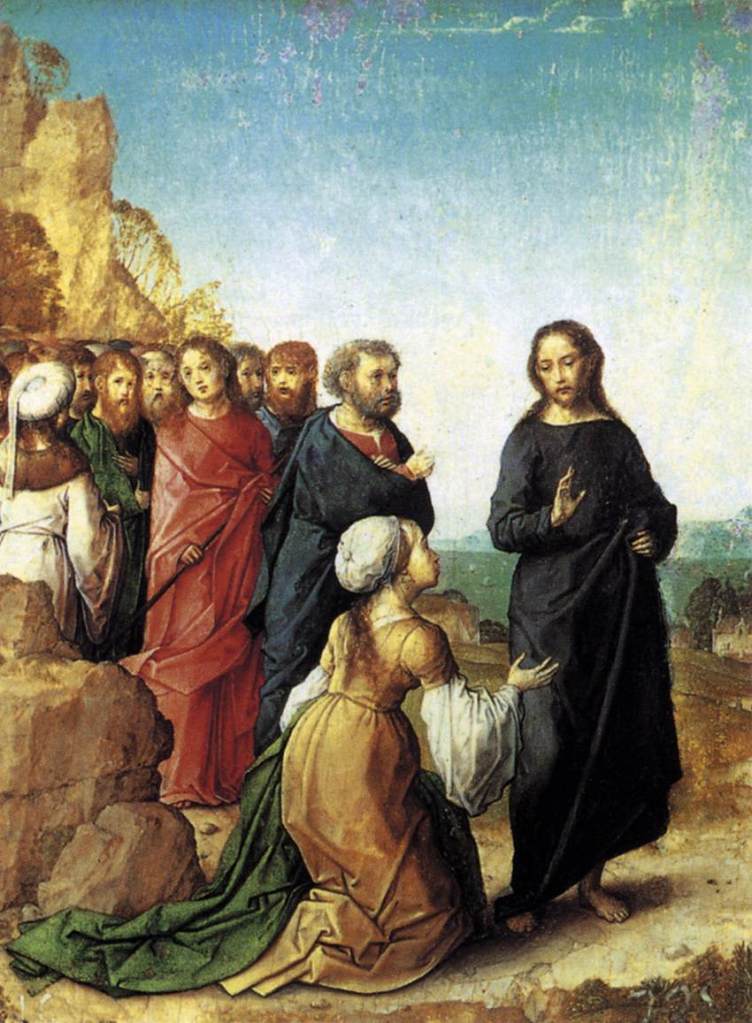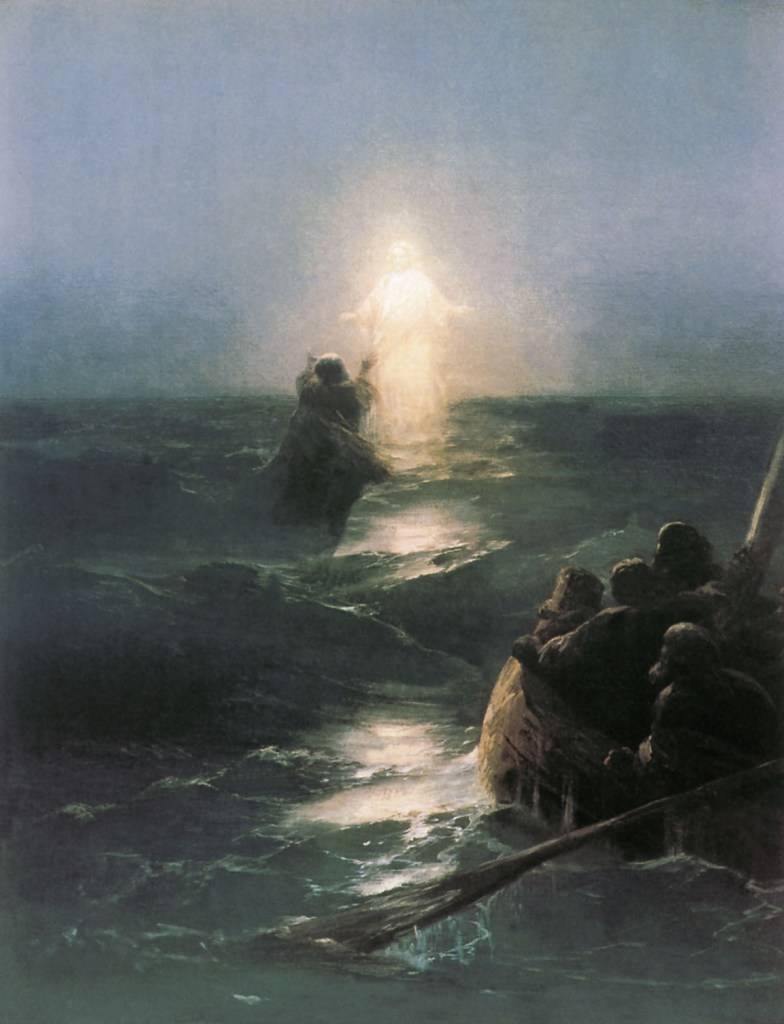
Created, Redeemed, and Made Holy by the Triune God

WORSHIP VIDEO LINK (linked after 10:45 AM Service)

WORSHIP AUDIO LINK

SERMON AUDIO LINK

BULLETIN

SERMON TEXT BELOW

Vicar Daniel English
May 31, 2026
Sermon – The Holy Trinity
Genesis 1:1-2:4a; Psalm 8; Acts 2:14a, 22-36; Matthew 28:16-20;

Created, Redeemed, and Made Holy by the Triune God

In the Name of the Father, and of the Son, and of the Holy Spirit. Amen.

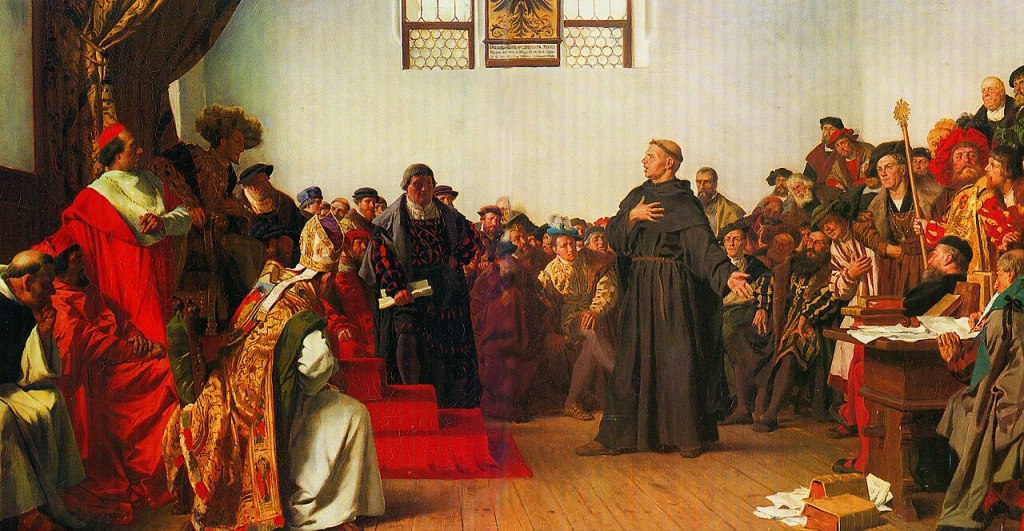
Today is Trinity Sunday, or the Feast of the Holy Trinity. Usually we have these special days in the church year in order to remember and celebrate some specific event in the life of Jesus Christ, like His birth of the Virgin Mary at Christmas, His death on Good Friday, or His resurrection on Resurrection Sunday. Other special days of the church year are observed to remember and celebrate some specific event in the history of the church, like Pentecost when we remember the Holy Spirit giving the apostles the miraculous ability to speak and be heard in other languages in order to preach the Gospel, or Reformation Day, when we remember the Lutheran Reformation in the 16th century, when the church —beginning in Germany— corrected various Roman abuses and recovered for the people both the Word of God and the the pure Gospel. But today, this special day in the church year, the Feast of the Holy Trinity, is unique because instead of remembering some specific event, we are remembering a specific teaching.[1] The doctrine of the Holy Trinity. Today we remember that we worship one God in Trinity and Trinity in Unity.[2] That God is Father, Son, and Holy Spirit. One God… in three Persons.

You may be surprised to discover that the words “Trinity” or “Triune God” are not in the Bible. This is true. Some skeptics may try to convince you since these specific phrases are not found in the Bible, that must mean the Holy Trinity is some kind of man-made invention, a made up and false teaching. Today, as we interact with those in our community (Jehovah’s Witnesses, Jews, Muslims, historical critical Bible scholars, or anyone else who is skeptical about this teaching) it is just as important as it ever was to be able to confess and defend the teaching of the Holy Trinity from the pages of Scripture.

The doctrine of the Holy Trinity is true. This is clear from the Scriptures, but it is still a great mystery. If you think you will walk out of here today completely understanding our Thrice Holy God, you will leave disappointed. The teaching of the Holy Trinity is something that we confess simply because the Scriptures make it clear that “the Father is God, the Son is God, the Holy Spirit is God; and yet there are not three Gods, but one God.”[3] It is above logic, it is divine. As we reach the limits of our human understanding, let’s stop and marvel at the glory and majesty of God and say with Paul: “Oh the depth of the riches and wisdom and knowledge of God! How unsearchable are his judgments and how inscrutable his ways!”[4]

Our Old Testament lesson begins like this: “In the beginning, God…” Before anything was, God already was. “In the beginning, God created the heavens and the earth.”[5] God created the light, then He created the water and sky and dry land and filled them with life, but no one created God. God is uncreated, He is without beginning. Notice the Trinity: God in verse 1, “In the beginning, God created the heavens and the earth,” the Spirit of God in verse 2, “And the Spirit of God was hovering over the face of the waters,” and the Word of God in verse 3, “And God said, ‘Let there be light.’”[6] In Luther’s Small Catechism, the Apostle’s Creed is divided into three sections, or articles. The First Article confesses faith in God the Father, and His work of creating you. But this is not only the work of God the Father. Jesus the Word is there too, as the Gospel of John teaches, “In the beginning was the Word, and the Word was with God, and the Word was God.”[7] The Holy Spirit is there too. The work of creation is the work of the Father, the Son, and the Holy Spirit. The Psalmist writes, “By the word of the LORD the heavens were made, and by the [Spirit] of his mouth all their host.”[8] The Father, Son, and Holy Spirit: these Three are one God. Later in Genesis chapter 1 God says, “‘Let us make man in our image, after our likeness.’ … So God created man in his own image, in the image of God he created him; male and female he created them.”[9] Our first reading reveals that you are created in the image of the Triune God.

In our second reading, Peter is continuing to teach the crowds at Pentecost, and he makes it clear that Jesus of Nazareth is Messiah and God. Notice the Trinity: Jesus is raised up by God the Father in verse 32 and in verse 33 Jesus is exalted at the right hand of God “having received from the Father the promise of the Holy Spirit, he has poured out this that you yourselves are seeing and hearing.”[10] Though Jesus was crucified, He does not see corruption. He rises from the dead and pours out His Holy Spirit from the right hand of God. Peter shows us that Jesus is the fulfillment of David’s Psalm. Jesus is God. The resurrection shows God’s almighty power. The second article of the Apostle’s Creed confesses faith in Jesus, the Son of God and His work of salvation won for you by His death and proven by His resurrection. This is the Triune God’s work of redemption, not only the work of Jesus. Like creation, it is the work of the Father, the Son, and the Holy Spirit: these Three are one God. Peter concludes his preaching with this: “Let all the house of Israel therefore know for certain that God has made him both Lord and Christ, this Jesus whom you crucified.”[11] You, like those listening to Peter, should be cut to the heart by this… because it was your sins also that crucified Jesus. The crowd asks, “what shall we do?” Peter replies, “Repent and be baptized every one of you in the name of Jesus Christ for the forgiveness of your sins, and you will receive the gift of the Holy Spirit. For the promise is for you and for your children and for all who are far off, everyone whom the Lord our God calls to himself.”[12] Our second reading shows that you are forgiven by the Triune God.

In our Gospel reading, the end of St. Matthew’s Gospel records some of Christ’s words before His Ascension. Notice the Trinity: “All authority in heaven and on earth has been given to me. Go therefore and make disciples of all nations, baptizing them in the name of the Father and of the Son and of the Holy Spirit, teaching them to observe all that I have commanded you. And behold, I am with you always to the end of the age.”[13] Right here —in what has long been considered the earliest Gospel— is a witness to the Holy Trinity: Father, Son and Holy Spirit. Christ gives this Triune Name to His church so that we can make disciples through baptism and teaching. The third article of the Apostle’s Creed confesses faith in the Holy Spirit and His work of “calling you by the Gospel, enlightening you with His gifts, sanctifying you, and keeping you in the true faith.” Just like the work of creation, and just like the work of redemption, sanctification is the work of the Father, the Son, and the Holy Spirit. These Three are one God. Our Gospel reading reveals that you are made holy by the Triune God.

One God. Uncreated, infinite, eternal, and almighty. The Father, the Son, and the Holy Spirit. The Holy Trinity creates you in His image, redeems you by the work of Christ, and gives you the gift of repentance and faith by the power of the Holy Spirit which works in you now to daily and richly forgive you all your sins. This promise is for you and for all people, and Christ’s church (that’s us) has the awesome privilege to proclaim this Good News to all those whom God gives us the opportunity. “Blessed be the Holy Trinity and the undivided Unity. Let us give glory to [H]im because [H]e has shown [H]is mercy to us.”[14] Amen.


[1] Fickenscher, Carl. Looking forward to Sunday Morning: Reflections on the Church Year, p 150

[2] Athanasian Creed, 4

[3] Athanasian Creed, 15-16

[4] Romans 11:33

[5] Genesis 1:1

[6] Genesis 1:1-3

[7] John 1:1

[8] Psalm 33:6, ESV translates the Hebrew, ruach (רוּחַ) and LXX, pneuma (πνεῦμα) as “breath”, both also mean “spirit”

[9] Genesis 1:26a, 27, emphasis mine

[10] Acts 2:33

[11] Acts 2:36

[12] Acts 2:37b-39

[13] Matthew 28:16b-20

[14] Introit for Holy Trinity, Liturgical Text

The Spirit is Living Water

WORSHIP VIDEO LINK (linked after 10:45 AM Service)

WORSHIP AUDIO LINK

SERMON AUDIO LINK

BULLETIN

SERMON TEXT BELOW

Pentecost 2026
Immanuel Lutheran Church, Hamilton, Ohio
Pastor Kevin Jud
May 24, 2026
Numbers 11:24-30, Acts 2:1-21, John 7:37-39

Sermons online: 
Text and Audio:         immanuelhamiltonchurch.com   click “sermons”
Text:                           pastorjud.org   
Audio:                         pastorjud.podbean.com 
itunes:                         bit.ly/pastorjud
Full Service Audio:    bit.ly/ImmanuelWorship

            When you think of the Holy Spirit, what symbols come to mind?  How do we represent the Spirit in Church art; in our windows and banners?  On banners and paraments and in our front window and side windows the spirit is represented as a dove because… Matthew 3:16–17 (ESV) 16 … when Jesus was baptized, immediately he went up from the water, and behold, the heavens were opened to him, and he saw the Spirit of God descending like a dove and coming to rest on him; 17 and behold, a voice from heaven said, “This is my beloved Son, with whom I am well pleased.” 

            On banners and the Pentecost window, the Spirit is represented by a flame.  This comes from our reading today from Acts.  Acts 2:1–3 (ESV) 1 When the day of Pentecost arrived, they were all together in one place. 2 And suddenly there came from heaven a sound like a mighty rushing wind, and it filled the entire house where they were sitting. 3 And divided tongues as of fire appeared to them and rested on each one of them.”  The Spirit is manifested as a dove and as a flame, and as wind. 

            The word “spirit” in Hebrew and Greek both mean wind or air or breath.  Jesus breathes on His disciples and says, John 20:22 (ESV) 22 … “Receive the Holy Spirit.”  The Spirit arrives on Pentecost with the sound like a mighty rushing wind.  The Holy Spirit is represented by a dove and a flame and wind, although it is hard to make a picture of wind. 

            There is another description of the Spirit that does not come so readily to mind which we find in our Gospel reading today.  John 7:37–39 (ESV) 37 On the last day of the feast, the great day, Jesus stood up and cried out, “If anyone thirsts, let him come to me and drink. 38 Whoever believes in me, as the Scripture has said, ‘Out of his heart will flow rivers of living water.’ ” 39 Now this he said about the Spirit, whom those who believed in him were to receive, for as yet the Spirit had not been given, because Jesus was not yet glorified.” The Spirit is Living Water flowing from Jesus. 

            In John 7, Jesus is at the feast.  This feast is the one everyone wants to be at so it is sometimes just called, The Feast. It is the Feast of Tabernacles or Feast of Booths.  It is a seven day festival remembering the Israelites 40 year exodus in the wilderness.  Families construct temporary huts to eat in and sleep in for seven days to remember their ancestors’ time in tents in the desert. 

            Each morning of the feast the priests go the pool of Siloam and bring back golden pitchers of water which they carry through the water gate to the temple and then pour the water out onto the altar to remember the waters of creation, and God providing water when Moses struck the rock in the desert, and also looking forward to the fulfillment of the prophecy of Ezekiel.  Ezekiel 47:1 (ESV)  1 Then he brought me back to the door of the temple, and behold, water was issuing from below the threshold of the temple toward the east (for the temple faced east). The water was flowing down from below the south end of the threshold of the temple, south of the altar.”

            Jesus comes from Galilee in the middle of the feast and teaches in the temple each day.  Some are fascinated by Jesus’ teaching… some want to kill him… the Pharisees send officers to arrest Jesus, but they are also captivated by His teaching.  When they return without Jesus… John 7:46 (ESV) 46 The officers answered, “No one ever spoke like this man!” 

            On the last day of the feast, likely as they are pouring out the water on the altar or after they finished…John 7:37 (ESV) 37 …Jesus stood up and cried out, “If anyone thirsts, let him come to me and drink.”

            Jesus has been boldly teaching at the Temple since the middle of the feast, but now, on the last day, Jesus shows great audacity.  The priests have been pouring out water to remember the waters of creation, water from the rock in the wilderness, and Ezekiel’s prophecy of water flowing from the temple. Jesus stands up and claims that He is the fulfillment of all of this.  Jesus was there at creation.  Jesus is the rock flowing with water.  Jesus is the temple gushing with water.  Jesus is the source of living water.  He continues, John 7:38 (ESV) 38 Whoever believes in me, as the Scripture has said, ‘Out of his heart will flow rivers of living water.’”  This verse begs a question.  Out of whose heart will flow rivers of living water? From the believer in Jesus?  Or from Jesus Himself?  The ESV leaves it a bit ambiguous.  Some translations are specific, The NRSV says, “Out of the believer’s heart shall flow rivers of living water.”’ 

     This passage has likely been mistranslated going all the way back to Origin of Alexandria, a Church father in the early 3rd Century.  Origin translates that the living water flows from the belly of the believer. The earlier translations are more like the New English Translation.  (NET) “If anyone is thirsty, let him come to me, and  38 let the one who believes in me drink.  Just as the scripture says, ‘From within himwill flow rivers of living water.”  Meaning, from within Jesus.  This follows better with Jesus saying, “If anyone thirsts, let him come to me and drink.” The dispute hinges on the placement of a period.  However, the original Greek manuscripts do not have punctuation, so Origin was relying on a later manuscript that added the period.  Not to go against a church father, but I believe that the living water flows from Jesus.

            Jesus stands up and announces that He is the source of Living Water; “If anyone thirsts, let him come to me and drink.  Earlier, in John 4, Jesus talks to the woman at the well.  John 4:10–14 (ESV) 10 Jesus answered her, “If you knew the gift of God, and who it is that is saying to you, ‘Give me a drink,’ you would have asked him, and he would have given you living water.”… “Everyone who drinks of this water will be thirsty again, 14 but whoever drinks of the water that I will give him will never be thirsty again. The water that I will give him will become in him a spring of water welling up to eternal life.” 

On the cross, after Jesus gives up His spirit, a Roman soldier spears Jesus and from His side flows water and blood. 

In John’s Revelation He writes, “Revelation 22:1–2 (ESV) 1 Then the angel showed me the river of the water of life, bright as crystal, flowing from the throne of God and of the Lamb 2 through the middle of the street of the city; also, on either side of the river, the tree of life with its twelve kinds of fruit, yielding its fruit each month. The leaves of the tree were for the healing of the nations.”

            On the high day of the feast, Jesus declares He is the source of living water and then John tells us what this living water is.  John 7:39 (ESV) 39 Now this he said about the Spirit, whom those who believed in him were to receive, for as yet the Spirit had not been given, because Jesus was not yet glorified.”

            The Holy Spirit cannot be given until after Jesus is glorified by His suffering and death on the cross, and His resurrection from the dead.  The Spirit testifies that Jesus paid the price for all your sins.  He cannot do that until Jesus paid the price for all your sins.  On that Pentecost, after the disciples receive the Holy Spirit by wind and flame, they are preaching and the people are convicted of having killed Jesus… Acts 2:37–39 (ESV) 37 Now when they heard this they were cut to the heart, and said to Peter and the rest of the apostles, “Brothers, what shall we do?” 38 And Peter said to them, “Repent and be baptized every one of you in the name of Jesus Christ for the forgiveness of your sins, and you will receive the gift of the Holy Spirit. 39 For the promise is for you and for your children and for all who are far off, everyone whom the Lord our God calls to himself.”  Three thousand that day are born again… born from above by water and the spirit and receive forgiveness of their sins.  In baptism you receive forgiveness of sins and the Holy Spirit; the Living Water of God welling up in you to eternal life.

            You live in a dry, dusty, sinful world intent on ignoring God’s law altogether, or trying to appease God by their own good works.  You are different.  You have the Holy Spirit and so when you are confronted by God’s law you realize that the world’s ways cannot work, and you are left thirsting for righteousness.  As hard as you try, you cannot free yourself from sin.  In a sermon on John 7 Martin Luther says that the one who thirsts is the one brought into despair by the Law.  To drink from Christ, that is from the Gospel, “satisfies the thirst, makes us cheerful, and revives and consoles the conscience.”[1]

Jesus proclaims, (NET) “If anyone is thirsty, let him come to me, and  38 let the one who believes in me drink. Just as the scripture says, ‘From within himwill flow rivers of living water.”  Amen. 


[1] Weinrich, William, John 7:2-12:50 Concordia Commentary Series, pg. 57

Christ is Risen! I am Baptized!

By Raphael – Royal Collection of the United Kingdom, Public Domain, https://commons.wikimedia.org/w/index.php?curid=1718078

WORSHIP VIDEO LINK (linked after 10:45 AM Service)

WORSHIP AUDIO LINK

SERMON AUDIO LINK

BULLETIN

SERMON TEXT BELOW

Easter 6 2026
Immanuel Lutheran Church, Hamilton, Ohio
Pastor Kevin Jud
May 10, 2026
Acts 17:16-31, 1 Peter 3:13-22, John 14:15-21

Sermons online: 
Text and Audio:         immanuelhamiltonchurch.com   click “sermons”
Text:                           pastorjud.org   
Audio:                         pastorjud.podbean.com 
itunes:                         bit.ly/pastorjud
Full Service Audio:    bit.ly/ImmanuelWorship

            It can be intimidating to talk about your faith with an outsider; an unbeliever.  There is a fear that you will say the wrong thing or misquote the Bible or get trapped by something the other person says.

            In today’s reading from Acts we see St. Paul give us a masterclass in preaching to unbelievers.  Athens is a place that is all about various philosophies, and gods and goddesses.  Paul is in Athens teaching in the Synagogue and in the marketplace and is engaging with Epicureans who seek pleasure, and Stoics who seek virtue.  Others hear Paul and are put off by his teaching, Acts 17:18 (ESV) 18 … some said, “What does this babbler wish to say?” Others said, “He seems to be a preacher of foreign divinities”—because he was preaching Jesus and the resurrection.” 

            In Athens there are laws about teaching foreign divinities and Paul is in a legal gray area.  Some seize him and bring him to the Areopagus where there is a legal counsel that wants to hear what Paul is preaching.  Paul is brilliant.  He brings up their altar to an unknown God and then teaches them about the true God.  Acts 17:23–25 (ESV) 23 … What therefore you worship as unknown, this I proclaim to you. 24 The God who made the world and everything in it, being Lord of heaven and earth, does not live in temples made by man, 25 nor is he served by human hands, as though he needed anything, since he himself gives to all mankind life and breath and everything.”  Basically, the real God doesn’t need you.  You need God.  God created all people from one man and God is close to each of us.  Acts 17:28 (ESV) 28 for “ ‘In him we live and move and have our being’ …”  Paul then quotes a Greek poet named Aratus who wrote a poem about Zeus.  Acts 17:28 (ESV) ; as even some of your own poets have said, “ ‘For we are indeed his offspring.”  Paul pulls a reference from Greek religious poetry and applies it to the true God. 

            Paul continues by showing a glaring flaw with the Greek gods and goddesses…Acts 17:29 (ESV) 29 Being then God’s offspring, we ought not to think that the divine being is like gold or silver or stone, an image formed by the art and imagination of man.”  God is the creator, you cannot make god.  After proclaiming the true God, Paul warns of the coming judgment of Christ who was raised from the dead.  Acts 17:30-31 (ESV)30 The times of ignorance God overlooked, but now he commands all people everywhere to repent, 31 because he has fixed a day on which he will judge the world in righteousness by a man whom he has appointed; and of this he has given assurance to all by raising him from the dead.” 

            Some mocked Paul for teaching about the resurrection of Jesus, others want to hear him again and some follow him and believe, including a member of the Areopagus legal counsel.

            Ohhhh, to be as articulate and wise as Paul.  To be able to engage unbelievers by using their own ideas to show the true God.  This would be a great tool for us in today’s world where so many live in unbelief and ignorance of God; Father, Son and Holy Spirit.  Oh, to be able to know cultural references well enough to be able to use them to proclaim the truth of salvation in Jesus.  Paul is an amazing preacher and teacher.

            It can be intimidating to think that when you engage with outsiders that you will be nowhere near as clever and wise as Paul…and that’s okay.  You are not St. Paul.  God did not appear to you on the road to Damascus and make you an apostle and send you to preach to the Gentiles.  But you are called to give testimony. What you are called to do we find today in our Epistle reading from 1 Peter. 

            Peter is writing to Christian exiles spread out in Asia Minor who are suffering persecution from the local citizens and the Romans.  Peter is encouraging them to remain faithful despite suffering… knowing that they blessed in Christ for eternity.  1 Peter 3:13 (ESV) 13 Now who is there to harm you if you are zealous for what is good?”  It is discouraging to suffer — it can be even more troubling to suffer for doing good.  Peter continues… 1 Peter 3:14–15 (ESV) 14 But even if you should suffer for righteousness’ sake, you will be blessed. Have no fear of them, nor be troubled, 15 but in your hearts honor Christ the Lord as holy, always being prepared to make a defense to anyone who asks you for a reason for the hope that is in you…”  

            Despite persecution… despite suffering… don’t fear…don’t be troubled…in your hearts honor Christ the Lord as holy.  And more than that — be prepared to make a defense to anyone who asks you for a reason for the hope that is in you.  So if the people harrassing you wonder why you don’t break down and just give up the faith, be ready to tell them.

            If those who are against you for believing in Jesus ask you, “why don’t you just give in?  Why don’t you give up on your silly Jesus?”  What would you say?  What is your defense for the hope that is in you?  This can be daunting because you can start to think that you need to be clever and articulate like Paul in Athens, but that is not what you are called to do.  You are called to simply defend your hope even under persecution.  Why do you have hope? 

            You have hope because, Christ is risen!  He is risen, indeed!  Alleluia!  You have hope, because you are baptized.  Your reason for hope can be summarized in six words.  Christ is risen!  I am baptized.  Repeat after me, “Christ is risen!  I am baptized!”  “Christ is risen!  I am baptized!”  These six words give the reason for the hope that is in you.  Because Christ rose from the dead it means He conquered sin, death and the devil.  In your baptism, Jesus’ victory is credited to you.  In Christ, you have conquered sin, death and the devil.  Christ is risen!  I am baptized! 

            Jesus conquered sin…1 Peter 3:18 (ESV) 18 For Christ also suffered once for sins, the righteous for the unrighteous, that he might bring us to God…”  On the cross Jesus paid the price for the sins of the world and gives that gift to you. 

            Jesus conquered death — by rising from the dead. He died, was buried, but He did not stay dead.  Christ is risen!  He is risen indeed, alleluia!  We have extensive eyewitness testimony of Jesus’ resurrection.  Matthew, Mark, John, and Peter were there and saw the resurrected Lord and wrote down their testimony.  Luke recorded the testimony of others who also were there.  

If Jesus does not return first, you will one day die and your body will be buried, and you too will not stay dead.  Because Christ rose from the dead, you will rise from the dead.  On that day, body and soul reunited, you will go to live in the Heavenly City of New Jerusalem forever with Jesus.  Romans 6:5 (ESV) 5 For if we have been united with him in a death like his, we shall certainly be united with him in a resurrection like his.”

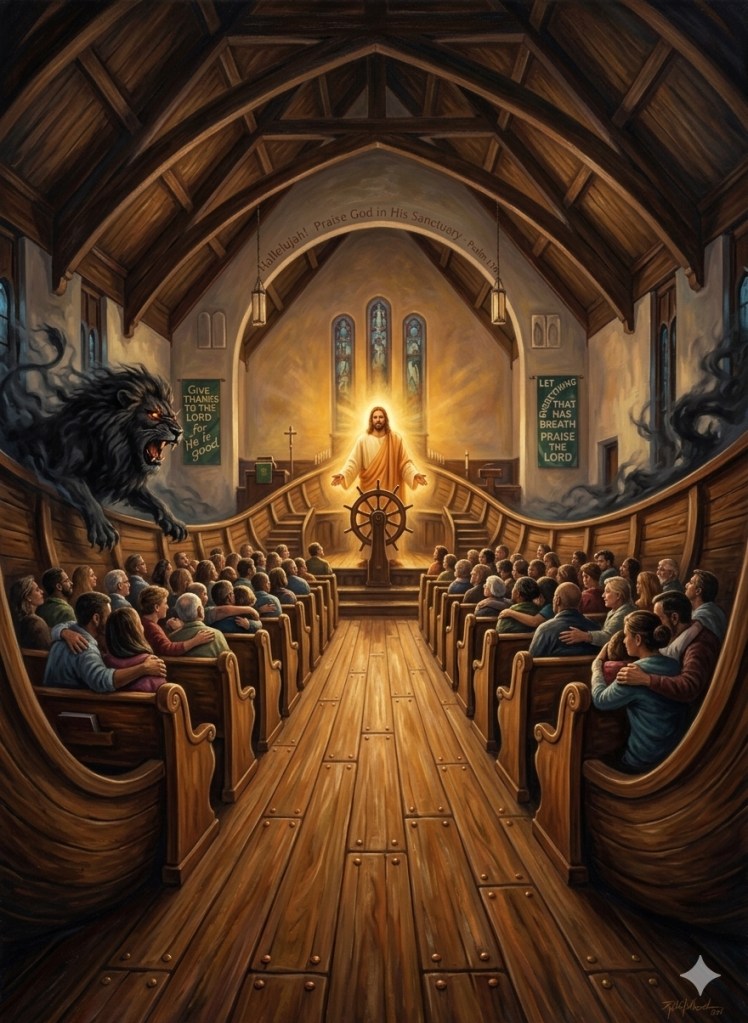
Jesus has conquered the devil.  The devil is prowling around like a roaring lion looking for someone to devour.  The devil is more powerful than you, but you do not fight the devil alone, you have Jesus, and Jesus has defeated the devil and has proclaimed his victory.

            In our reading today from 1 Peter we have this somewhat cryptic passage that is one of the main sources of the line in the Apostles’ Creed, “He descended into hell.”  Peter writes…1 Peter 3:18–20 (ESV) 18 …being put to death in the flesh but made alive in the spirit, 19 in which he went and proclaimed to the spirits in prison, 20 because they formerly did not obey, when God’s patience waited in the days of Noah, while the ark was being prepared, in which a few, that is, eight persons, were brought safely through water.”

            The line, “He descended into hell,” can be confusing. The way it is placed in the creed it kind of sounds like Jesus went to hell to suffer for three days, but that is not what happened.  Jesus went to hell to proclaim victory – Jesus defeated the devil.  As we read in… Colossians 2:15 (ESV) 15 He disarmed the rulers and authorities and put them to open shame, by triumphing over them…” 

            In baptism and through the Word of God you have the Holy Spirit dwelling in you.  With the Holy Spirit in you the devil cannot take control of you, he cannot possess you; he can only try to tempt you to sin.  James 4:7 (ESV) 7 Submit yourselves therefore to God. Resist the devil, and he will flee from you.”

            What is the reason for the hope that you have?  Christ is risen!  I am baptized!  Jesus defeated sin, death and the devil for you.

            There is a temptation to use your salvation in Jesus as a kind of way to boast about yourself or to use it as almost a club against others. But that is not how you tell of the hope that you have.  Instead…1 Peter 3:15–16 (ESV) 15 … do it with gentleness and respect, 16 having a good conscience, so that, when you are slandered, those who revile your good behavior in Christ may be put to shame.” 

            In this world of evil, you will stand out for doing good.  You may suffer for doing good. Peter teaches… 1 Peter 3:17 (ESV) 17 … it is better to suffer for doing good, if that should be God’s will, than for doing evil.”

            Be prepared to be unloved by the world.  Do good anyway.  Speak with gentleness and respect and be prepared to give a reason for the hope that you have.  Remember the six words of hope.  Christ is risen!  I am baptized!  Amen. 

Newborns Need Milk, You Need the Word of God

Stanisław Wyspiański, Motherhood, 1905, National Museum in Krakow, Kraków, Poland. Detail.

WORSHIP VIDEO LINK (linked after 10:45 AM Service)

WORSHIP AUDIO LINK

SERMON AUDIO LINK

BULLETIN

SERMON TEXT BELOW

Easter 5 2026 Confirmation Sunday
Immanuel Lutheran Church, Hamilton, Ohio
Pastor Kevin Jud
May 3, 2026
Acts 6:1-9, 7:2a, 51-60,  1 Peter 2:2-10, John 14:1-14

Sermons online: 
Text and Audio:         immanuelhamiltonchurch.com   click “sermons”
Text:                           pastorjud.org   
Audio:                         pastorjud.podbean.com 
itunes:                         bit.ly/pastorjud
Full Service Audio:    bit.ly/ImmanuelWorship

            Think back to when you were little.  What is your earliest memory?  How old are you?  What are you doing?  I remember when I was three years old or so at preschool and the teacher is reading the book Stone Soup and the whole class is working together to make a pot of soup — not exactly sure why that stuck with me.  Now go back two or three years earlier until you are two weeks old.  What are you thinking then?  What are you doing?  What do you most desire?  You do not remember being two weeks old, but you can figure out what it is that you most desired.  You want mom to hold you tight and feed you.  You want to nurse.  You want milk.  A clean diaper and a burped belly and a nap are all good, but the thing you want the most is milk.

            St. Peter writes in his first letter …1 Peter 2:2 (ESV) 2 Like newborn infants, long for the pure spiritual milk, that by it you may grow up into salvation,”

            Like a newborn craves milk, crave pure spiritual milk.  So what is it?  What is the pure, spiritual milk?  To find out, we back up just a little in Peter’s letter to Christian exiles scattered throughout modern day Turkey.  1 Peter 1:23 (ESV) 23 … you have been born again, not of perishable seed but of imperishable, through the living and abiding word of God;”

            What is the pure spiritual milk?  It is the living and abiding word of God.  It is the Good News of forgiveness of sins through the life, death and resurrection of Jesus. 

In baptism you were born again of water and the Word of God. You were born from above through water and the Spirit.  The Holy Spirit came into you through the Word of God and now dwells in you making your body His temple.  You are forgiven and declared holy and pure and are given eternal life through the Word of God. 

            Our confirmands today will declare for themselves what was spoken for them at their baptism.  They will renounce — they will reject — the devil and all his works and all his ways.  They will declare belief in God, Father, Son and Holy Spirit with the words of the Apostles’ Creed.  I will ask them, “What is the Word of God?”  The confirmands will declare they believe the prophetic and apostolic scriptures; the Old Testament and New Testament, are the inspired Word of God, and the teachings of Luther’s Small Catechism drawn from the Word of God are faithful and true. And then I will ask questions regarding their intentions with the pure spiritual milk; the living and abiding Word of God.

            I will ask, “Do you intend to hear the Word of God and receive the Lord’s Supper faithfully?”  Basically, do you intend to keep coming to church?

            “Do you intend to live according to the Word of God, and in faith, word and deed to remain true to God, Father, Son and Holy Spirit, even to death?”  Are you like the wise man in Matthew 7?  Matthew 7:24 (ESV) 24 “[Jesus said] Everyone then who hears these words of mine and does them will be like a wise man who built his house on the rock.”

            The Word of God is pure spiritual milk.  The Word of God delivers to you forgiveness of sins and eternal life won for you by Jesus. You have been born again through imperishable seed; the living and abiding Word of God. 

Our confirmands today will publicly declare that the Word of God is more important to them than anything in this world. This is radically counter to the ways of our society.  The world wants you to idolize money and fame and power and your own body.  The world wants you to live for yourself because you only live once.  The temptation of this life is to think that your body and your stuff are most important. But you know…stuff is temporary and will degrade and be destroyed.  What about your body?  What do we learn on Ash Wednesday?  Dust you are and to dust you shall return.  Your physical body is fleeting as we learn in… 1 Peter 1:24–25 (ESV) 24 for “All flesh is like grass and all its glory like the flower of grass. The grass withers, and the flower falls, 25 but the word of the Lord remains forever.” And this word is the good news that was preached to you.”

            Your flesh is fleeting but the Word of the Lord remains forever.  God’s promise to you in your baptism is for this life and for after this life, it is a promise for eternity.  Abide in the Word of God.  Cling to Word.  Newborns need milk.  You need the Word of God.

            As a follower of Jesus continually recommit to remaining in God’s Word.  The devil desperately wants to separate you from God’s Word so your faith will starve.  Fight back.  Establish a habit of daily Bible reading so you are constantly fed by the pure spiritual milk. Learn the Word of God so well you can easily spot a false teacher.  Get started. Start small if needed.  Read a chapter in the morning with coffee, or before bed, or together at the dinner table, or listen to the Word while you are on the bus, or in the car, or out for a walk.  Drink pure spiritual milk each day.  If you work up to three chapters a day you will read the entire Bible each year. Find what works for you to form an ongoing habit of being in the Word.  If helpful, I have various Bible reading plans available at both entrances to give you some alternative ways of working your way through the Holy Scriptures. Pick a way and daily remain in the Word for the Word of God is pure spiritual milk. 

            If a newborn could talk, what would she say after nursing before falling asleep?  Perhaps, simply, “Thanks be to God!”  How do you respond each Sunday when you hear the Word of God read? “Thanks be to God. Praise to you, O Christ.” 

            Peter goes on to instruct how to live together as those born again for eternity through the living and abiding Word of God.  1 Peter 2:1 (ESV) 1 So put away all malice and all deceit and hypocrisy and envy and all slander.”  The devil is always trying to tear Christians apart with false teaching and jealousy and discord.  As baptized, redeemed children of God craving spiritual milk and building up the spiritual house you reject all malice, all deceit, all hypocrisy, all envy and all slander and instead you live together in love and humble service — forgiving one another abundantly as Christ forgives you.  As the followers of Jesus…1 Peter 2:4–5 (ESV) 4 …you come to him, a living stone rejected by men but in the sight of God chosen and precious, 5 you yourselves like living stones are being built up as a spiritual house, to be a holy priesthood, to offer spiritual sacrifices acceptable to God through Jesus Christ.”

            As followers of Jesus, born again by imperishable seed, you are living stones.  You are the living stones of the Church, the Body of Christ on earth.  You are a holy priesthood.  As a holy priest of God, you sacrifice selfish living for yourself in order to live for God.  You reject the ways of the devil and the world and your own sinful desires because you are a new creation in Christ Jesus.  You know the Word of God is your source of salvation.  As newborns need milk, you need the Word of God so you come to worship each week to hear God’s Word and receive Holy Communion. 

            A question for the confirmands, and everyone else here.  For how long will you come to worship to hear the Word of God and receive Holy Communion? For how long?  For how long will you crave the pure spiritual milk?  For how long will you need the Word of God?

You are in it for the long run.  You will need pure spiritual milk until the day we wheel you down the aisle one last time covered by the white pall. 

Newborns need milk, you need the Word of God — so you come each week to confess your sins and hear that your sins are forgiven.  You come to drink the pure spiritual milk of God’s Word and receive the Body and Blood of Jesus.  Nothing is more important.  As Peter tells Jesus in John 6:68 (ESV) 68 … “Lord, to whom shall we go? You have the words of eternal life,…”

            Babies need milk. You need pure spiritual milk; the living and abiding Word of God.  Thanks be to God.  Amen.   

The Promise is for You and Your Children

WORSHIP VIDEO LINK (linked after 10:45 AM Service)

WORSHIP AUDIO LINK

SERMON AUDIO LINK

BULLETIN

SERMON TEXT BELOW

Easter 3 2026
Immanuel Lutheran Church, Hamilton, Ohio
Pastor Kevin Jud
April 19, 2026
Psalm 116:1-14, Acts 2:14, 36-41, 1 Peter 1:17-25, Luke 24:13-35

Sermons online: 
Text:               pastorjud.org   
Audio:             pastorjud.podbean.com 
itunes:            bit.ly/pastorjud

            Have you ever found yourself going along with others and doing the wrong thing because everyone around you is doing the wrong thing? I have a number of examples from my own life, but I better not share since I’m not sure about the statute of limitations. 

            There is an equation about boys doing stupid things. One boy = one brain.  Two boys = half a brain.  Three boys = no brain at all.  What happens then with a mob?  A mob completely loses its mind. 

            On that fateful Friday morning the crowd of people assembled outside of the Governor’s palace were likely, at first, minding their own business, but then they got caught up doing what mobs do.  The Jewish leaders got the crowd all stirred up demanding that Jesus of Nazareth be crucified.  The crowd shouted for the release of the criminal Barabbas and for Jesus to be executed, “Crucify him!  Crucify him!”  The mob was not placated by seeing Jesus whipped and abused but cried all the louder, “Crucify him!  Crucify him!” Having found nothing in him deserving death, the governor wanted to release Jesus but the crowd insisted on His death.  The governor then washed his hands before the crowd and said, “I am innocent of this man’s blood; see to it yourselves,” to which the crowd cried out, “His blood be on us and on our children!”

            Fast forward 50 days.  The crowd is back together in Jerusalem but everything is different.  It is Pentecost, the Feast of Weeks, a harvest festival 50 days after the Passover. People are in town from all over the Mediterranean; many likely came for the Passover and stayed on for Pentecost. The whole city is abuzz.  There have been lots of rumors flying around about Jesus of Nazareth.  Folks are saying that He rose from the dead and many people claim they have seen the risen Jesus.  It is said that Jesus ascended into heaven ten days ago and now the followers of Jesus have suddenly gained the ability to speak in many different languages.

            The people in the crowd start to ask themselves, “What did we do?  How could we have cried out for Jesus’ blood?”  One of Jesus’ disciples, a man named Peter, addresses the crowd and lets them know what happened.  Acts 2:32 (ESV) 32 This Jesus God raised up, and of that we all are witnesses.”  Jesus was raised from the dead and has been exalted to the right hand of God the Father and now God has poured out the Holy Spirit on these disciples of Jesus with a great wind and tongues of fire. 

            Peter tells the crowd, Acts 2:36 (ESV)  36 Let all the house of Israel therefore know for certain that God has made him both Lord and Christ, this Jesus whom you crucified.”

            Jesus is Lord and Christ.  Pilate wanted to release Him, but the crowd insisted on Jesus’ death.  They insisted that His blood to be on them, and on their children.  What have they done?  They crucified the Lord.  They are guilty of the blood of the Christ.

            The crowd has gone from the blind fervor of a blood-thirsty mob, to having a deepening pit in their stomachs over the unfolding reality of what they have done, to now experiencing full-fledged terror and panic because of their sin.

            They have not offended an earthly ruler; they have offended the creator of the earth.  They have crucified God in flesh.  “Brothers, what shall we do?”

            The crowd has no hope.  To whom do you turn when you have crucified the Lord?  Judas felt the burden of this guilt and he despaired and hung himself. What do you do when you have committed such a terrible sin?  “Brothers, what shall we do?”

            “Repent and be baptized.”  Acts 2:38-39 (ESV) 38 …. “Repent and be baptized every one of you in the name of Jesus Christ for the forgiveness of your sins, and you will receive the gift of the Holy Spirit. 39 For the promise is for you and for your children and for all who are far off, everyone whom the Lord our God calls to himself.”

            From the depths of despair Peter gives the people living hope.  Repent and be baptized in the name of Jesus Christ. And this is for all people.  This is not just for men, not just for women, not just for Jews. 

As the crowd cried out for Jesus’ blood to be on them — and their children — the promise of salvation is for them — and their children and for all who are far off.  There is no maximum age limit.  There is no minimum age limit.  No geographical limit.  The promise is for everyone.

            What an amazing promise to this guilty crowd.  They have Jesus’ blood on their hands.  You can look at them and think, wow!  They are terrible sinners…they put Jesus on the cross…but then the awful truth dawns.  You too are guilty of Jesus’ blood.  Your sins also put Jesus on the cross; He is suffering and dying for you. As you look at the cross there is the horrible knowledge that you too are guilty of the blood of Jesus and there is nothing you can do to fix it.  This is powerful guilt and the devil knows it. 

When you find yourself mired in guilt, the devil gets up in your ear and whispers in an almost audible way, “This time it is just too much.  You say you’re a Christian but look at what you think about.  Look at what you do.  God cannot forgive you.  You are too far gone.  Your sin is too bad.”  Under attack by the devil you cry out, “What shall I do?

            Repent and be baptized.  Repent and remember that in your baptism Jesus made a promise to you that you belong to Him.  In Christ you have forgiveness and eternal life.  In Jesus you have been freed from the guilt of your sins and set apart from the multitude of unbelievers to live in the Kingdom of God. 

            When the devil accuses you of being a sinner you tell the devil, “You’re right. It is true.  I am a sinner.  But Jesus paid for my sins.  I am baptized.  Jesus made a promise to me and He doesn’t break His promises.  So, be gone devil!  I belong to Jesus.”  Alone, the enormity of your sin would be overwhelming, but you are not alone.  In Christ you have been set free. 

            You are set free by Jesus.  Set free by baptism, set free by confession and absolution, set free by the Lord’s Supper. Your sins are forgiven.  Those who cried out for Jesus to be crucified found forgiveness in Jesus and 3,000 were baptized that day.  You, whose sin put Jesus on the cross, today receive forgiveness from the risen Lord Jesus.  Christ is risen!  He is risen indeed!  Alleluia! 

            The message of salvation is simple and straightforward.  Peter does not sugar-coat some message about how the people need to dream big dreams or have their best life now or just try harder to please God.  Peter confronts the people with their sin and points them to Jesus for forgiveness.  Peter bears witness to Jesus and exhorts the people to beware of the ways of the world, Acts 2:40 ESV …Save yourselves from this crooked generation.”

            The ways of the world then were opposed to God’s way.  The ways of the world now are opposed to God’s way. Faithful believers and faithful churches are set apart from this crooked generation.  Faithful believers and faithful churches will find themselves pushed more and more to the margins where we will be ridiculed and censured by the so-called intellectuals who embrace and promote this crooked generation.  You will feel great pressure to conform your life to the ways of the world and adopt the world’s ways as your ways.  But as a baptized child of God you no longer belong to the world, you belong to Jesus.  You are transformed by the Word of God.  As a follower of Jesus you live your life inside the boundaries of God’s law.  You know God’s law does not crush your freedom to do whatever you want, but rather God’s law enables you to live in the freedom to do what is right.  To love God and love your neighbor.

            You have heard the message that Peter preached that first Pentecost.  Acts 2:38-39 (ESV) 38 …. “Repent and be baptized every one of you in the name of Jesus Christ for the forgiveness of your sins, and you will receive the gift of the Holy Spirit. 39 For the promise is for you and for your children and for all who are far off, everyone whom the Lord our God calls to himself.”

            This is the message that brought you to faith in Jesus Christ.  This is the message we preach to strengthen each other in this life.  This is the message we bring to a world that struggles with sin.  This is the message we bring to a world that needs forgiveness.  The promise of forgiveness in Jesus is for you and for your children and for all who are far off.  You belong to Jesus.  Amen. 

Expect the Unexpected

WORSHIP VIDEO LINK (linked after 10:45 AM Service) End cut off.

WORSHIP AUDIO LINK

SERMON AUDIO LINK

BULLETIN

SERMON TEXT BELOW

Resurrection of our Lord 2026
Immanuel Lutheran Church, Hamilton, Ohio
Pastor Kevin Jud
April 5, 2026
Acts 10:34-433, Colossians 3:1-4, Matthew 28:1-10

Sermons online: 
Text and Audio:         immanuelhamiltonchurch.com   click “sermons”
Text:                           pastorjud.org   
Audio:                         pastorjud.podbean.com 
itunes:                         bit.ly/pastorjud
Full Service Audio:    bit.ly/ImmanuelWorship

First thing Sunday morning, following the Sabbath, Mary Magdalene and the other Mary head to Jesus’ tomb.  We learn from the Gospels of Mark and Luke that the women are bringing spices to anoint Jesus’ body and are worried about who is going to roll back the stone for them. What are they expecting to find?  They are expecting to find Jesus’ dead body in the grave, sealed with a stone, and guarded by soldiers.  They expect to find dead Jesus despite the fact that Jesus told His followers many times… Matthew 16:21 (ESV) 21 … that he must go to Jerusalem and suffer many things from the elders and chief priests and scribes, and be killed, and on the third day be raised.” 

Jesus told them He would rise, but the reality of the world is so powerful that it can snuff out hope.  Dead is dead.  The two Marys expect to find dead Jesus and are hoping the guards or someone will help them roll back the stone so they can properly complete the rushed burial preparation that happened on Friday.  They expect dead, decaying Jesus.  What they encounter is so beyond expectations.  Matthew 28:2–4 (ESV) 2 And behold, there was a great earthquake, for an angel of the Lord descended from heaven and came and rolled back the stone and sat on it. 3 His appearance was like lightning, and his clothing white as snow. 4 And for fear of him the guards trembled and became like dead men.”

            An angel of the Lord, shining with God’s glory, descends and rolls back the stone with such power and might it makes the earth shake. The guards faint with fear.  God’s messenger delivers the greatest message of all time.  Matthew 28:5–6 (ESV) 5 … “Do not be afraid, for I know that you seek Jesus who was crucified. 6 He is not here, for he has risen…”  Christ is risen!  He is risen indeed!  Alleluia!  As the Marys depart the tomb, Jesus greets them and they take hold of His feet and worship Him.

            Matthew 28:6 (ESV) 6 He is not here, for he has risen, as he said. Come, see the place where he lay.” He is risen, as He said.  The angel tells the women, you should have known He would rise from the dead.  You should have expected to find Jesus alive.  You should have expected the unexpected.

            Mary Magdalen and the other Mary should have come to the tomb expecting the stone to be rolled away and Jesus to be there to greet them.  And it certainly was not just the women whose hope was smothered by the realities of the world.  The disciples should know, for certain, that Jesus would rise from the dead and they should be waiting for Him on Sunday morning.  Joseph of Arimathea and Nicodemus should know that Jesus would rise, but as they prepare Him for burial they act like He is going to decompose and stink like any other dead body as they wrap Him with myrrh and aloes.  All of these people know that Jesus does the unexpected, but the realities of the world extinguish their trust in Jesus’ Words. It is far too easy to fall into friendship with the world and trust the ways of the world.  The Lord’s brother James warns…James 4:4 (ESV) 4 …Do you not know that friendship with the world is enmity with God? Therefore whoever wishes to be a friend of the world makes himself an enemy of God.”

            This happens over and over with Jesus and His disciples.  The disciples do not expect the unexpected when 5,000 people are hungry and there are just five loaves and two fish, or when they see Jesus walking on the water and think it is a ghost, or when Jesus is asleep in the boat during a storm and they become afraid that they will die, or when Jesus is being bothered by little children who have no power or influence, or when a man is possessed by a legion of demons, or when a man born blind comes to Jesus for healing, or when Lazarus has been dead in the grave for four days.  It is too easy to think that the reality of the world is too much for Jesus.  So when they do not believe that Jesus will rise from the dead it is one more time that the realities of the world have quenched their trust in the Lord.

            You live on the other side of all these events.  You know for certain that Jesus rose from the dead, you have the eyewitness accounts.  You know Jesus can do the unexpected — and yet, the powerful realities of the world can still dampen your faith in Jesus’ promises. 

            When you stand by the grave of a loved one, the reality of the world tells you that this is the end, that they are gone forever. But Jesus promises the unexpected. Those who die in Christ will rise from the dead to eternal life.  Because Christ has risen from the dead, you will rise from the dead.  Christ is risen!  He is risen indeed!  Alleluia! 

            Life as a follower of Jesus is a life of the unexpected. You know Jesus died on the cross and rose from the dead to forgive the sins of the world.  You know Jesus offers forgiveness to all people, but this is so unexpected the world rejects it.

            Through the enlightenment of the Holy Spirit, you know that you are, by nature, sinful and unclean, and that you cannot do anything to save yourself.  You know it has all been done by Jesus.  But the world tells you that you get what you deserve.  You get what you earn.  If you want something done right, you have to do it yourself.  There is a great temptation to reject Jesus’ undeserved grace and to think that you have to do something to add to what Jesus has done. The world wants you to believe that you have to repent well enough.  You need to pray enough.  You need to read the Bible enough.  You need to give enough.  You need to do enough good works to deserve forgiveness. 

            The world wants you to ask, “how can Jesus possibly forgive people who are honest-to-goodness real sinners like tax collectors and prostitutes, and the prodigal son.”  The world thinks Jesus should only forgive those who deserve it.  That is what the world expects.  But Jesus does the unexpected.  Not only does Jesus forgive real sinners, but there is great joy in heaven over one sinner who repents. 

            The way Jesus delivers forgiveness in baptism, in His Word, and in the Lord’s Supper seems like foolishness to the world.  It does not make sense.  How can water do such great things?  How can a bit of bread and a sip of wine accomplish anything?  How can words change anything?  The world says that things have to make sense; that is what we expect.  But Jesus does the unexpected.  Jesus delivers forgiveness directly to you in your baptism, in the words of absolution, in His Body and Blood at His altar.  Your sins are forgiven in unexpected ways.  Unexpectedly, your real sins are really forgiven.

            You have been forgiven.  You have been transferred from the domain of darkness to the Kingdom of Heaven.  You have been declared to be a holy, righteous, pure child of God because Jesus has given His righteousness.  Jesus has conquered sin and death for you.  Christ is risen!  He is risen indeed!  Alleluia! 

It does not makes sense, but even while you still struggle with sin and temptation from the devil, the world and your own sinful nature, you are, right now, a saint of God.  You are, at the same time, a sinner and a saint. 

As God’s saint you are called to live in unexpected ways.  You love your enemies and pray for those who persecute you. You turn the other cheek.  You know that freedom is not found in doing whatever you want and indulging your every selfish desire.  As a saint of God you know that freedom is found in following God’s commands and loving and serving others. 

You live in joyful thankfulness for all the Lord has done for you in good times and hard times.  You are generous in helping those in need.  You loan money at no interest without expecting repayment.  You love and serve others as Jesus loves and serves you.

            As a holy, righteous child of God you live in unexpected ways.  You give up your right to get even with others and instead forgive them, because Jesus gave up His right to get even with you and instead forgives you.  You do the unexpected.  You give up your lazy Sunday mornings in order to gather together with your brothers and sisters in Christ to hear the Good News and receive forgiveness from Jesus.  Each Sunday you humble yourself before God by getting on your knees and pleading guilty of sinning in thought, word and deed, by what you have done and by what you have not done that you should have done.  In generous thanksgiving for what Jesus has done for you, you give a first-fruits sacrificial offering to the Lord to continue to spread the Good News of Jesus here and around the world.  You come to the altar of the Lord with people from all walks of life to kneel together in complete unity to receive the Body and Blood of Christ. You love the unlovable and forgive those who do not deserve it.  You are a part of the body of Christ unified in one Lord, one faith, one baptism.  You are one body together: young and old, rich and poor, workers and bosses, male and female.  There are no worldly distinctions; you are one in Christ.

            Expect that Jesus will do what the world does not expect.  Live your life in ways unexpected by the world because Jesus did the unexpected for you – He rose from the dead.  Christ is risen!  He is risen indeed!  Alleluia! Amen.

The Sign of the Cross

Gustave Doré – Christ on the Cross

WORSHIP VIDEO LINK 

WORSHIP AUDIO LINK

SERMON AUDIO LINK

BULLETIN

SERMON TEXT BELOW

Daniel English 
April 3, 2026
Sermon – Good Friday
Isaiah 52:13-53:12; Psalm 22; Hebrews 4:14-16; 5:7-9; John 19:17-30; John 18:1-19:42;

The Sign of the Cross

In the Name of the Father, and of the Son, and of the Holy Spirit. Amen.

This is it. This is what Christianity is all about. “[Jesus] was pierced for our transgressions; he was crushed for our iniquities; upon him was the chastisement that brought us peace, and with his wounds we are healed… [H]e poured out his soul to death and was numbered with the transgressors; yet he bore the sin of many, and makes intercession for the transgressors.”[1] These words were written by the Prophet Isaiah approximately 700 years before the birth of Christ.[2] This is the event for which God’s people were waiting. This is the central event of all history, of all eternity.

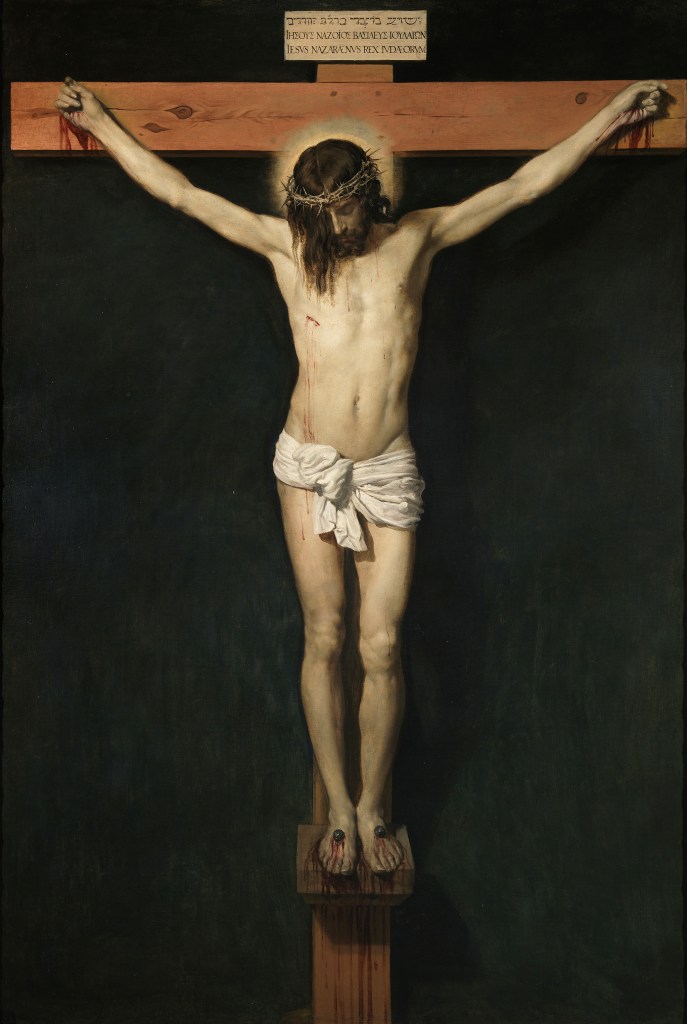
Tonight we remember the Crucifixion of our Lord Jesus Christ. We ponder the cross. The cross is the ultimate symbol of Christianity. As I began, I spoke the Name of the Triune God, and some of you made the sign of the cross. On Ash Wednesday, you received an ashen cross upon your forehead. Before Pastor Jud reads from the Holy Gospel, he makes the sign of the cross on his lips and his heart. When we bring our young children to the rail during the Sacrament of the Altar, they receive the sign of the cross on their foreheads to remind them of their baptism —the day when they received the sign of the cross on their foreheads and their hearts to mark them as one redeemed by Christ the crucified. At the beginning of the Divine Service, we pro-cess behind a depiction of Jesus on the cross, and we end services with a benediction accompanied by the sign of the cross. More than a few of you probably wear a cross around your neck. The cross is everywhere. Even in traditions that have done away with almost every other kind of Christian symbol, sculpture, or artwork, they will still have the cross. The ubiquity of this symbol isn’t new. Of course it began with the crucifixion, but by the second century Christians are recorded as wearing out their foreheads with the sign of the cross, making it “at every forward step and movement, at every going in and out… in all the ordinary actions of daily life.”[3] We often sing in the beautiful hymn, Abide with Me, “Hold thou Thy cross before my closing eyes;”[4] The cross is ours, and nobody can take it from us… but when was the last time you really beheld the cross of Christ? Good Friday —the most somber holy-day of the year— forces us to remember that the cross is where Christ’s body was hung to die, and it is only by Christ’s body being there that the cross has any power at all.

Whenwe behold the cross of Christ, we see the gory death of our Lord. And by His death we are shown the seriousness of our sin. — Therefore, the cross is a sign of repentance and holy fear. — In the cross of Christ, we also see the Father’s great love for us. “God sent his only Son into the world, so that we might live through him.”[5] — So the cross is also a sign of hope and love. — The cross of Christ is where Jesus’ side is pierced, and out come the blood and the water. The cross is where Jesus gives His Body and sheds His Blood for our eating and drinking, and the water that flows from His riven side is the Water of Life, the very source of our baptismal waters. — The cross is, finally, a sign of forgiveness and salvation.

Repentance and Holy Fear

The Crucifixion is gruesome and it’s bloody. Even before the Crucifixion, Jesus is beaten by Caiaphas and his council. After being turned over to the Roman authorities, Jesus’ beating continues. A crown of thorns is pressed into His head, and Jesus is scourged with a metal-tipped whip. Now, the six hour long crucifixion is just beginning. Isaiah prophetically describes Jesus during His Crucifixion, “his appearance was so marred, beyond human semblance, and his form beyond that of the children of mankind.”[6] Jesus’ physical damage is so severe that He is hardly recognizable. This torture is paired with the climax of His spiritual agony as Jesus is forsaken by the Father. This is not the way you would expect any man to be treated, much less the Son of God. As the Psalmist prophesies, Jesus is treated like a worm, not a man.[7] On the cross, Jesus becomes and is treated as the worst of all sinners. Luther writes, “And all the prophets saw this, that Christ was to become the greatest thief, murderer, adulterer, robber, desecrator, blasphemer … [that] there has ever been anywhere in the world. He is not acting in His own Person now. Now He is not the Son of God, born of the Virgin. But He is a sinner, who has and bears the sin of Paul, the former blasphemer, persecutor, and assaulter; of Peter, who denied Christ; of David, who was an adulterer and a murderer, and who caused the Gentiles to blaspheme the name of the Lord (Rom. 2:24). In short, He has and bears all the sins of all men in His body – not [because] he has committed them but [because, out of love,] He took these sins, committed by us, upon His own body, in order to make satisfaction for them with His own blood.”[8] On the cross, Jesus bears the sin that so easily entangles you. We see the wrath of the Father poured out on Christ as He bears the punishment we justly deserve. “What Thou, my Lord, hast suffered Was all for sinners’ gain; / Mine, mine was the transgression, But Thine the deadly pain. / Lo, here I fall my Savior! ‘Tis I deserve Thy place; / Look on me with Thy favor, And grant to me Thy grace.”[9]

Hope and Love.

All for sinners’ gain… It’s in the “why” of Christ’s Crucifixion that something so gory and so awful becomes something so gracious and wonderful. Jesus Christ died on the cross for you. Jesus Christ suffered the punishment for your sin so you wouldn’t have to. Jesus Christ died to save you… He died to reconcile you to the Father and to make Himself your brother, so that you would become a co-heir with Him of Eternal Life. “For the human mind the death of Christ on the cross naturally [seems] to be utmost confusion and wretchedness, not the glorious salvation event it really [is]. But a Christian knows better in spite of tears, sorrow, pain, and death.”[10] By the Holy Spirit’s work through your Baptism, through the Word, and through the sustaining Holy Supper… you know better. You know that Christ’s death on the cross is your eternal life. “God the Father, driven by His loving will, sends [Jesus] His Word through which He creates the world. [We are] not simply ejected from creation… God’s Word became flesh in Jesus Christ, the first missionary, through whom God the Father is reconciled to [us].”[11] And we to Him.

Forgiveness and Salvation

Now, with eyes of faith we behold the Crucifixion with awe and wonder. The Crucifixion is even… beautiful. The dispensation of this beautiful exchange from the cross is what Christianity is all about. Our sin in exchange for Christ’s righteousness, the punishment we deserve in exchange for a full pardon, the death of our mortal flesh in exchange for everlasting life. Having heard of these things, do you want them? Is this an exchange you desire to be made? My brothers and sisters in Christ, they are yours by faith… and faith is a gift from the cross. After Jesus died, a soldier “pierced his side with a spear, and at once there came out blood and water.”[12] From the cross, Jesus, the Lamb of God, gives His Body for you to eat. From the cross, Jesus sheds His Blood for you to drink. And in the eating and drinking you receive strengthened faith and the forgiveness of sins. From the cross, Jesus pours out the baptismal waters so that you can be washed. And in the washing you receive faith and the righteousness of Christ. Jesus does all this so that you can hear the Word of God and believe it. Doesn’t it make sense now why we lift high the cross and hold it before us everywhere we go? Upon waking, before eating, while praying. The cross is the emblem of your salvation!

Suffering for a Time

The cross is also the emblem of your suffering. You, Christians, are partakers of the cross, joined to Christ by His very Body and Blood. Through your baptism you are bonded to the death of Jesus, but your baptism also binds you to His resurrection, “[f]or if we have been united with him in a death like his, we shall certainly be united with him in a resurrection like his. We know that our old self was crucified with him in order that the body of sin might be brought to nothing.”[13] “[G]rief, torment, and pain will continue [in this life]. Spiritual trials, struggles of conscience, sorrow, and anguish must also occur. The heart must be smitten by terror; the old man must be destroyed. Struggles with unbelief, indignation against God, [and] even despair plague the Christian because [w]e often cannot see the will of God and His counsel in time of suffering.”[14] Behold… our cross.

“Luther’s advice is clear: Be still; let God rule. Thank God that He has given you the word and the promise. …fix [your] eyes and… [your] mind on the word alone, on baptism, on the Lord’s Supper, … on absolution.”[15] On His cross.

And so we look to the crucified and risen Lord Jesus Christ, and we pray: “Be Thou my consolation, [O Lord,] My shield, when I must die; / Remind me of Thy passion When my last hour draws nigh. / Mine eyes shall then behold Thee, Upon Thy cross shall dwell, / My heart by faith enfold Thee. Who dieth thus dies well.”[16]

In the Name of Jesus. Amen.

And now may the peace of God, which surpasses all understanding, guard your hearts and minds in Christ Jesus unto life everlasting, until He returns in glory. Amen.


[1] Isaiah 53:5, 12b

[2] Edward A. Engelbrecht, ed., Lutheran Bible Companion, Volume 1: Introduction and Old Testament (St. Louis: Concordia Publishing House, 2014), 715.

[3] Tertullian, “The Chaplet, or De Corona,” in Ante-Nicene Fathers, Vol. 3, ed. Alexander Roberts and James Donaldson (Buffalo, NY: Christian Literature Publishing Co., 1885), Chap. 3, ccel.org.

[4] “Abide with Me,” in Lutheran Service Book (St. Louis: Concordia Publishing House, 2006), 878, st. 6.

[5] 1 John 4:9b

[6] Isaiah 52:14b

[7] Psalm 22:6

[8] Martin Luther, Lectures on Galatians, 1535, Chapters 1-4, vol. 26 of Luther’s Works, ed. Jaroslav Pelikan and Helmut T. Lehmann (St. Louis: Concordia Publishing House, 1963), 277.

[9] “O Sacred Head, Now Wounded,” in Lutheran Service Book (St. Louis: Concordia Publishing House, 2006), Hymn 449, st. 1.

[10] Heino O. Kadai, “Luther’s Theology of the Cross,” in Concordia Theological Quarterly Vol 63, no. 3 (July 1999): 193.

[11] Klaus Detlev Schulz, Mission from the Cross: The Lutheran Theology of Mission (St. Louis: Concordia Publishing House, 2009), 93 (emphasis mine).

[12] John 19:34b

[13] Romans 6:5-6a

[14]  Heino O. Kadai, “Luther’s Theology of the Cross,” in Concordia Theological Quarterly Vol 63, no. 3 (July 1999): 194.

[15] Kadai, “Luther’s Theology of the Cross”: 194.

[16] “O Sacred Head, Now Wounded,” st. 4.

Like Barrabbas: Guilty but Freed by Christ

Duccio di Buoninsegna – Christ Before Pilate Again

WORSHIP VIDEO LINK 

WORSHIP AUDIO LINK

SERMON AUDIO LINK

BULLETIN

SERMON TEXT BELOW

Daniel English
March 11, 2026
Sermon – Lent 5 – Midweek Wednesday
Isaiah 53:4-7; Matthew 27:1-26;

Like Barabbas: Guilty but Freed by Christ

In the Name of the Father, and of the Son, and of the Holy Spirit. Amen.

“When morning came.”[1] In case we would forget as we turn the page from the 26th chapter of Matthew’s Gospel to the 27th, these words remind us that Jesus has been struck, spit on, slapped, and mocked all night. After the Last Supper with His disciples the night before —the Last Supper before His death— Jesus is betrayed and arrested —falsely arrested— while praying in the Garden of Gethsemane on the Mount of Olives.[2] Jesus is beaten and abused by Caiaphas and his council after they conduct a sham trial and falsely convict Him.[3] Jesus is betrayed by one… and abandoned by the rest of his disciples, including, finally, by Peter.[4] Jesus has had a very long night. This is where our Gospel reading begins. Morning breaks and the Son of Righteousness rises to be bound, and led away, and delivered over to Pilate in order that He be sentenced to death.[5]

As the light of day exposes the sinful works of man, God’s Word gives us three, negative examples from which we can learn. Three examples of what NOT to do. First, the betrayer, Judas, who is in deep despair over his sins to the point of taking his own life. Judas is sorry for his sins —he has contrition— but he does not have faith in God’s mercy and forgiveness. Second, the governor, Pontius Pilate, who denies justice and rejects the truth for the sake of his own personal safety and success. Pontius Pilate does not believe that Jesus is guilty or deserving of death —he has conviction— but he lacks the courage to do what is right. Third, the chief priests, the elders, and the crowds who demand that Jesus be crucified. They are envious and wrathful. They are blind to who Jesus is and blind to their own sin. The actions of these three, Judas, Pontius Pilate, and the crowds result in the release of a notorious criminal, Barabbas, while our Lord Jesus Christ is sent off to die. But what these three meant for evil, God meant for good.

There isn’t much good at all that can be said about Judas Iscariot. He is an unbelieving[6] thief[7] who agrees to betray Jesus in exchange for 30 pieces of silver.[8] Even Jesus calls him “a devil.”[9] Judas receives his plan to betray Jesus from the devil himself.[10] But even Judas, when he sees that Jesus is condemned, is filled with regret. He doesn’t even want the money he received as a reward. As he tries to return it he says, “I have sinned by betraying innocent blood.”[11] Judas has contrition, but he doesn’t have faith. The reformers knew very well that proper repentance consists of two parts: contrition and faith (Ap XIIa 1).[12] It is not enough for a person to know and regret his sin. In his Meditation on Christ’s Passion, Luther writes, “After man has thus become aware of his sin and is terrified in his heart, he must watch that sin does not remain in his conscience, for this would lead to sheer despair… Therefore beware, lest you do as those perverse people who torture their hearts with their sins and strive to do the impossible, … [to] get rid of their sins by running from one good work … to another… if you … presume to still your conscience with your contrition and penance, you will never obtain peace of mind, but will have to despair in the end.”[13] And this is exactly what Judas does. He is in such despair that he takes his own life. When you are convicted of your sin, don’t wallow in your guilt like Judas. This only leads to despair. Instead, look to Jesus in faith and see His loving heart. Martin Luther continues, “We know God [rightly] when we grasp him not in his might or wisdom… but in his kindness and love. Then faith and confidence are able to exist, and then man is truly born anew in God.”[14]

Pontius Pilate is the governor of Judea. He is a Roman ruler serving under emperor Tiberius in an area predominately populated by Jews. Judea is a difficult province to govern. Various Jewish sects: the Pharisees, the Sadducees, the Zealots, the Yahad, and the Hellenized Jews are all in tension with one another,[15] not to mention conflict with the Samaritans and Gentiles in the neighboring regions. Now the Jews seemingly come together in agreement: Jesus is causing problems, and he needs to be killed. Pilate is amazed by Jesus’ silence in response to the false charges brought before him,[16] he understands that Jesus has been delivered up out of envy,[17] and he doesn’t find Jesus guilty of any crime deserving death.[18] Jesus is innocent, and Pontius Pilate knows that Jesus is innocent… but he doesn’t have the courage to stop his crucifixion. To prevent Jesus’ death would risk public unrest that could mean the end of his political career or even his life. Foolishly, Pontius Pilate fears those who kill the body but cannot kill the soul. His encounter with the Word made flesh does not yield fruit, but —like a sprout with no root or choked out by thorns— he chooses to declare himself innocent in one moment, then scourges Jesus and delivers him over to be crucified in the next.[19] It is true, we are not justified by our good works, and so Pilate having courage wouldn’t have saved him, but we can’t “imagine a kind of faith that can exist and abide with, and alongside of, a wicked intention to sin and to act against conscience. But after a man has been justified through faith, then a true living faith works by love (Ep III 11).”[20] Instead of cowering like Pilate, we are to hold fast to the faith and encourage one another to love and good works.[21]

Finally, the chief priests and the elders with the crowd they persuaded to destroy Jesus. It would be hard to believe that this crowd could be the same people who just a week ago on Palm Sunday shout, “Hosanna to the Son of David! Blessed is he who comes in the name of the Lord! Hosanna in the highest!”[22] Whether fickle followers of Jesus or a hand-picked crowd by the Jewish elites[23], we see a disturbing showing of the depths of human evil. It had become a regular custom for Pilate to release a prisoner at the feast of Passover. The crowd is given the choice between Jesus, an innocent man, and Barabbas, a notorious criminal. The crowd presses for Barabbas to be released, and for Jesus to be put to death. “Pilate saw that he was gaining nothing, but rather that a riot was beginning, he took water and washed his hands before the crowd, saying, ‘I am innocent of this man’s blood; see to it yourselves.’ And all the people answered, ‘His blood be on us and on our children!’”[24] The irony. “His blood be on us and on our children.” If only the crowds understood the power of Jesus’ blood they would cry out instead, “Deliver me from bloodguiltiness, O God, O God of my salvation, and my tongue will sing aloud of your righteousness.”[25] The chief priests, the elders, and the crowds present at Jesus’ trial before Pilate are spiritually blind. They are spiritually dead. They are the final negative example set before us in today’s reading, and they choose a criminal Barabbas to be released instead of the perfect Lamb of God. But what they meant for evil, God meant for good.

The Scriptures in many places invite the reader to imagine himself as part of the Biblical narrative. Maybe you see yourself in the Israelites as they are rescued by David’s courageous and decisive victory over Goliath, fearful and reticent the Israelites wait on David to do what they are unable to do[26]… just as we wait on the Lord Jesus Christ to do what we are unable to do. Maybe you see yourself in the unnamed disciple with Cleopas on the Road to Emmaus as Christ unveils Himself in the Old Testament, slow to understand and believe the two disciples feel their hearts burning within them as they learn from the Lord until they finally come to know Him in the breaking of the bread[27]… just as our understanding and faith deepen by the Power of the Holy Spirit working through the Word and is sustained and strengthened at the Lord’s Supper. Maybe in Joseph’s brothers as they receive forgiveness from Joseph so surprising that they can hardly believe it is real… just as we hear from Pastor an absolution of all our sins that sounds too good to be true, but it is true. In today’s reading, I invite you to see yourself in Barabbas… a sinner… imprisoned, unworthy, and guilty. And yet, Christ suffers death on the cross and Barabbas is released, free and uncondemned.

Luther calls this the “wonderful exchange.” “That is the mystery which is rich in divine grace to sinners: wherein by a wonderful exchange our sins are no longer ours but Christ’s, and the righteousness of Christ is not Christ’s but ours. He has emptied Himself of His righteousness that He might clothe us with it, and fill us with it. And He has taken our evils upon Himself that He might deliver us from them… in the same manner as He grieved and suffered in our sins, and was confounded… we rejoice and glory in His righteousness.”[28]

Be sorry for your sins, but don’t stop there and despair. Have faith in Jesus for deliverance… Believe in the righteousness, and innocence, and blessedness of Jesus, but don’t stop there. Have the courage to live out your convictions in love toward God and one another… Do not be spiritually blind, refusing to see your own sin or to know who Jesus is, but repent and believe the Gospel.

“For all have sinned and fall short of the glory of God, and are justified by his grace as a gift, through the redemption that is in Christ Jesus, whom God put forward as a propitiation by his blood, to be received by faith. This was to show God’s righteousness, because in his divine forbearance he had passed over former sins. It was to show his righteousness at the present time, so that he might be just and the justifier of the one who has faith in Jesus.”[29]

We all are like Barabbas… guilty… but freed by Christ. In Christ, we are innocent and free.

In the Name of Jesus. Amen.


[1] Matthew 27:1a

[2] Matthew 26:20-29; 26:36-55;

[3] Matthew 26:57-68

[4] Matthew 26:69-75

[5] Matthew 27:1-2

[6] John 6:63-64

[7] John 12:4-6

[8] Matthew 26:14-16

[9] John 6:70-71

[10] Luke 22:1-6; John 13:2

[11] Matthew 27:4

[12] McCain, Paul Timothy et al., eds. Concordia: The Lutheran Confessions; A Reader’s Edition of the

Book of Concord. 2nd ed. St. Louis: Concordia, 2006.

[13] Martin Luther, “A Meditation of Christ’s Passion,” in Luther’s Works, Vol. 42: Devotional Writings I, ed. Jaroslav Jan Pelikan, Helmut T. Lehmann, and Christopher Boyd Brown (Philadelphia: Fortress Press, 1969), 6–14.

[14] Ibid. 

[15] Bryan Stecker, “Episode Three – Understanding the Jewish Religion with Jacob Benson,” November 13, 2023, YouTube video, 0:42:59, https://www.youtube.com/watch?v=-Z_HzijjDq4.

[16] Matthew 26:14

[17] Matthew 27:18

[18] Luke 23:4, 22

[19] Matthew 27:24-26

[20] McCain, Paul Timothy et al., eds. Concordia: The Lutheran Confessions; A Reader’s Edition of the

Book of Concord. 2nd ed. St. Louis: Concordia, 2006.

[21] Hebrews 10:23-25

[22] Matthew 21:9

[23] Maier, Paul L., “Commentary: The Most Overlooked Verse in the Bible,” Reporter, February 5, 2007, https://reporter.lcms.org/2007/commentary-the-most-overlooked-verse-in-the-bible/.

[24] Matthew 27:24-25

[25] Psalm 51:14

[26] 1 Samuel 17

[27] Luke 24:13-35

[28] Luther, Martin. Werke (Weimar, 1883), 5:608

[29] Romans 3:23-26

What is better than eternal life?

WORSHIP VIDEO LINK (linked after 10:45 AM Service)

WORSHIP AUDIO LINK

SERMON AUDIO LINK

BULLETIN

SERMON TEXT BELOW

Lent 5 2026
Immanuel Lutheran Church, Hamilton, Ohio
Pastor Kevin Jud
March 22, 2026
Ezekiel 37:1-14, Romans 8:1-11, John 11:1-45

Sermons online: 
Text and Audio:         immanuelhamiltonchurch.com   click “sermons”
Text:                           pastorjud.org   
Audio:                         pastorjud.podbean.com 
itunes:                         bit.ly/pastorjud
Full Service Audio:    bit.ly/ImmanuelWorship

            Survivor is an interesting show.  People voluntarily endure miserable conditions, lack of sleep, severe lack of food and primitive hygiene.  Why do they do it?  In hopes of a $1 million prize.  It is said that everyone has their price.  Normally you would not do something, but for enough money you would. 

            What would it take for you to give up eternal life with Jesus?  How much would be enough?  After Jesus raises Lazarus from the dead, the chief priests and the Pharisees are faced with this dilemma.  John 11:47–48 (ESV) 47 …“What are we to do? For this man performs many signs. 48 If we let him go on like this, everyone will believe in him…”  

            A little earlier, in Jerusalem, Jesus restored sight to a man born blind, but there was some confusion as to what took place, Jesus made mud with saliva and anointed a man’s eyes, and that man went off to wash and someone came back who could see, but did it really happen?  The religious leaders sowed confusion and doubt.  But now Jesus has raised a man from the dead who has been dead for four days.  And this was not done quietly, there was a crowd of people standing outside the tomb when Jesus had the stone rolled back and He shouted at a dead man, “Lazarus, come out!”  And Lazarus came out.  Jesus has authority over blindness, and also over death.

            What Jesus has done will cause many to believe in Him and Jesus has taught repeatedly that whoever believes in Him has eternal life. John 3:16 (ESV) 16 “For God so loved the world, that he gave his only Son, that whoever believes in him should not perish but have eternal life.  John 3:36 (ESV) 36 Whoever believes in the Son has eternal life…  John 6:40 (ESV) 40 For this is the will of my Father, that everyone who looks on the Son and believes in him should have eternal life, and I will raise him up on the last day.”  Just before raising her brother Lazarus, Jesus told Martha, John 11:25–26 (ESV) 25 … “I am the resurrection and the life. Whoever believes in me, though he die, yet shall he live, 26 and everyone who lives and believes in me shall never die…” 

            Word of Jesus’ promise of eternal life to all who believe in Him has certainly made it to the Jewish leaders.  That with the fact that Jesus just healed a blind man and raised a man from the dead is causing great anxiety.  While they do not want to accept it, the Jewish leaders know that Jesus has the power of God.  What would be so valuable to them that they would choose it over Jesus and the promise of eternal life?

            John 11:47–48 (ESV) 47 …“What are we to do? For this man performs many signs. 48 If we let him go on like this, everyone will believe in him, and the Romans will come and take away both our place and our nation.”  Caiaphas and the others are afraid that if more people believe in Jesus it could cause trouble and the Romans will replace the Jewish leaders with others friendlier to the Romans.  They are worried they could lose their jobs.  Their jobs…or eternal life?  They are likely not thinking about it in quite that way, but that is what is at stake.

            Jesus has been warning the Pharisees and other Jewish leaders to repent and follow Him.  When the Pharisees come to Galilee to question Jesus and His disciples about breaking their handwashing rules Jesus rebukes them.  Matthew 15:7–9 (ESV) 7 You hypocrites! Well did Isaiah prophesy of you, when he said: 8 “ ‘This people honors me with their lips, but their heart is far from me; 9 in vain do they worship me, teaching as doctrines the commandments of men.’”  Now, Jesus has come to Jerusalem and He is causing no end of trouble and everything seems to spinning out of control.  Wiser heads need to prevail.  Someone needs to restore calm.  Caiaphas declares to the Jewish leaders… John 11:49–50 (ESV) 49 …“You know nothing at all. 50 Nor do you understand that it is better for you that one man should die for the people, not that the whole nation should perish.”  Caiaphas thinks he is going to kill Jesus in order to save his own position, but what Caiaphas is doing as High Priest is selecting the final sacrificial Lamb to die for the sins of all people.  Caiaphas’ words as High Priest are in line with the will of God.  Indeed, it is better that one man should die for the people rather than all the people perish. Caiaphas declares this not just as a leader, but as God’s High Priest.  Now, Caiaphas rejects the Messiah, he has forgotten God’s mercy, he teaches that salvation is through following hundreds of rules, but he still holds the office of High Priest.  As High Priest Caiaphas prophesies John 11:51–52 (ESV) 51 …that Jesus would die for the nation, 52 and not for the nation only, but also to gather into one the children of God who are scattered abroad.”  Caiaphas may also be prophesying God’s truth when he announces to the Jewish leaders who reject Jesus, “You know nothing at all.”

            The Jewish leaders reject eternal life in order to try to save their positions.  They are willing to kill the one who makes the blind see and raises the dead.  Still today, there is a great temptation to reject eternal life in order to protect something else.  What would be more important than eternal life with Jesus? Some reject eternal life in order to be friends with the world.  People reject the true Jesus and make up their own Jesus in order to fully embrace whatever new perversion comes along that twists God’s good gifts.  People make up a Jesus who celebrates sexual immorality and the sacrifice of unborn children on the altar of sexual freedom.  They make up a Jesus who continually evolves to keep promoting ever-changing immorality.

            People give up eternal life with Jesus in order to pursue, financial success, or athletic success or academic success.  They reject the true Jesus who died for their sins in exchange for a “life-coach Jesus” who helps them build their self-esteem and achieve their goals.  I fear many people have given up eternal life with Jesus because they want to have a lazy Sunday morning.   

            In our easily offended society, there is a temptation to reject belief in the true Jesus who is the way, the truth and the life, and the only way to the Father, in exchange for a Jesus who is at peace with false teachers and false religions.  Their new Jesus is not the way; he is just way.  People give up eternal life in order to not offend anyone. 

            Folks give up the true Jesus who pays the price for natural born sinners who cannot save themselves, in exchange for a Jesus that has you earn salvation so you can find dignity in your works. 

            There is great temptation to give up belief in Jesus so you can indulge your pride, your lust, your greed, your anger, your right to get even. There is a powerful desire in each of us to mold a new Jesus in our image instead of being conformed to the Word of God.

What would it take for you to give up eternal life with Jesus?         Jesus gives the free gift of forgiveness and eternal life to all who believe in Him through the Holy Spirit.  You have the real Jesus.  Rejoice in the real Jesus who restored sight to the blind and raised the dead and who delivers to you forgiveness, life and salvation in the waters of Holy Baptism, in the Word of God, in Jesus’ words of absolution, and in the Body and Blood of your Savior in Holy Communion. 

            The world looks at Jesus’ means of delivering grace and scoffs at the humble simplicity of water, words, bread and wine.  You rejoice.  You know that Jesus is the one who died for the people and rose from the dead to conquer sin and death and give you eternal life.

            Caiaphas and the Jewish leaders know nothing at all. You have eternal life in Jesus.  There is nothing… not even life itself, more valuable than that.  What would it take for you to give up eternal life with Jesus?  Nothing. You have the greatest gift ever given. You live the humble life of a repentant sinner who knows you cannot save yourself, and who knows that you have been saved by the love of God through the blood of Jesus. 

            At confirmation I ask the question, “Do you intend to continue steadfast in this confession and Church and to suffer all, even death, rather than fall away from it?  The confirmands answer, “I do, by the grace of God.”  In the face of the tremendous temptation to give up on Jesus for something else, I ask you, “Do you intend to continue steadfast in this confession and Church and to suffer all, even death, rather than fall away from it?”  If so, answer, “I do, by the grace of God.”

            You have the greatest treasure possible.  You have faith in Jesus given you by the Holy Spirit. You believe in Jesus.  You have eternal life.  Amen. 

There is darkness, there is light. There is blindness there is sight.

WORSHIP VIDEO LINK (linked after 10:45 AM Service)

WORSHIP AUDIO LINK

SERMON AUDIO LINK

BULLETIN

SERMON TEXT BELOW

Lent 4 2026
Immanuel Lutheran Church, Hamilton, Ohio
Pastor Kevin Jud
March 15, 2026
Is 42:14-21, Ephesians 5:8-14, John 9:1-41

Sermons online: 

Text and Audio:         immanuelhamiltonchurch.com   click “sermons”
Text:                           pastorjud.org   
Audio:                         pastorjud.podbean.com 
itunes:                         bit.ly/pastorjud
Full Service Audio:    bit.ly/ImmanuelWorship

            A couple weeks ago we heard about the Pharisee, Nicodemus, coming to Jesus at night to find out more about this new teacher.  Jesus teaches him about being born from above by water and the spirit and that God loved the world, in this way, that He sent His only son that whoever believes in Him should not perish but have eternal life. Jesus concludes His teaching with Nicodemus… John 3:19–21 (ESV) 19 And this is the judgment: the light has come into the world, and people loved the darkness rather than the light because their works were evil. 20 For everyone who does wicked things hates the light and does not come to the light, lest his works should be exposed. 21 But whoever does what is true comes to the light, so that it may be clearly seen that his works have been carried out in God.” 

            There is darkness and there is light.  Jesus is the light.  John 1:4–5 (ESV) 4 In him was life, and the life was the light of men. 5 The light shines in the darkness, and the darkness has not overcome it.”

            There is darkness and there is light.  There is blindness and there is sight.  In our Gospel reading, Jesus leaves the temple after the Jews want to stone him for saying John 8:58 (ESV) 58 …“Truly, truly, I say to you, before Abraham was, I am.”  “I am”, is God’s name.

            John 9:1 (ESV) 1 As [Jesus] passed by, he saw a man blind from birth.”  Being born blind is a great disability; at Jesus’ time and today. While some progress is being made, still, with all our medical advances, there is no cure for someone born blind.

            The disciples do not talk to the man, but they talk about him.  There is a common belief that suffering is retribution from God for specific wrongdoing.  The disciples want to know who sinned, this man, or his parents.  John 9:3–5 (ESV) 3 Jesus answered, “It was not that this man sinned, or his parents, but that the works of God might be displayed in him. 4 We must work the works of him who sent me while it is day; night is coming, when no one can work. 5 As long as I am in the world, I am the light of the world.” 

            Jesus spits on the ground and makes mud with the saliva and anoints the man’s eyes and tells him, “Go wash in the pool of Siloam.” The man does what he is told, he goes to the pool south of the Temple Mount washes the mud off, and comes back seeing. A man, blind from birth, can now see. This is an incredible miracle of God. No one else can make the blind see.  Jesus is the real deal.  Isaiah prophesied, Isaiah 35:5 (ESV) 5 Then the eyes of the blind shall be opened…”

            The formerly blind man is well known.  Everyone has seen him sitting outside the temple begging. Now it is clear that the man who was blind can now see, but, trying to discredit Jesus, they dispute that it is really him. They question the man and he replies, John 9:11 (ESV) 11 … “The man called Jesus made mud and anointed my eyes and said to me, ‘Go to Siloam and wash.’ So I went and washed and received my sight.” The man can physically see; spiritually his eyes are beginning to open.  He describes the healer as, “The man called Jesus.”

            The man is questioned by the Pharisees who dispute among themselves whether someone who broke one of their abundant Sabbath rules by making a tablespoon of mud could be from God — even though He did a miracle that only God can do.  When asked, “What do you say about Him,” the man answers, “He is a prophet.”  The man is being enlightened.

            After his parents refuse to say how their son was healed, for fear of being thrown out of the synagogue, the Jews question the man again about what happened.  They go back and forth and the man boldly proclaims, John 9:32–33 (ESV) 32 Never since the world began has it been heard that anyone opened the eyes of a man born blind. 33 If this man were not from God, he could do nothing.”  The formerly blind man’s spiritual eyes are widening and he confesses that Jesus is from God.

            Unable to win on the facts, the Pharisees switch to an ad hominin attack, John 9:34 (ESV) 34 … “You were born in utter sin, and would you teach us?” And they cast him out. The Pharisees do not want the truth…they do not want a reminder of the truth… they reject the miracle…they reject the Messiah who showed His authority over blindness… they reject the light.

            John 9:35–38 (ESV) 35 Jesus heard that they had cast him out, and having found him he said, “Do you believe in the Son of Man?” 36 He answered, “And who is he, sir, that I may believe in him?” 37 Jesus said to him, “You have seen him, and it is he who is speaking to you.” 38 He said, “Lord, I believe,” and he worshiped him.” The man has physical sight and now the man can spiritually see.  He calls Jesus, “Lord,” and he worships Him.  The man was in the darkness, but now he is in the light.  He was blind, but now he sees. 

            John 9:39 (ESV) 39 Jesus said, “For judgment I came into this world, that those who do not see may see, and those who see may become blind.”  The man born blind can now see — physically and spiritually.  He is living in the light of Christ.  He is one of those who do not see who may see.  Who then are they who see who may become blind?  John 9:40 (ESV) 40 Some of the Pharisees near him heard these things, and said to him, “Are we also blind?” 

            Jesus answer is a bit confusing, John 9:41 (ESV) 41 Jesus said to them, “If you were blind, you would have no guilt; but now that you say, ‘We see,’ your guilt remains.”  The man born blind initially does not know who Jesus is, but the light of Christ shines on him and he begins to understand, and then understand even more, and confesses Jesus is Lord.  The Pharisees believe they know the scriptures, but they are blind.  They are so corrupted in their understanding that instead of rejoicing with a man born blind who can now see, they obsess over Jesus making mud on the Sabbath, and they kick the healed man out of the synagogue for not condemning Jesus.

            There is darkness and there is light.  There is blindness and there is sight.  Jesus is the light.  The light rescues you from darkness.  As Paul writes to the Colossians… Colossians 1:12–14 (ESV) 12 [give] thanks to the Father, who has qualified you to share in the inheritance of the saints in light. 13 He has delivered us from the domain of darkness and transferred us to the kingdom of his beloved Son, 14 in whom we have redemption, the forgiveness of sins.”  And to the Ephesians….Ephesians 5:8 (ESV) 8 for at one time you were darkness, but now you are light in the Lord. Walk as children of light…”  

            There is darkness and there is light.  There is blindness and there is sight.  It is as simple and complex as that.  Jesus is the light.  Jesus rescued you from the darkness and now you are a child of light.  This morning we get to witness God rescuing Johann and Hannah from the darkness and bringing them into the Kingdom of light through water and the Spirit.  They were in darkness, but now they are light in the Lord. They were blind, but now they see.

            Jesus is the light.  Jesus is the only light.  There is no other light.  If you seek a way other than Jesus, you are walking in darkness.  If you seek a way other than Jesus you are blind. 

            Jesus is the light.  The light shines in the darkness.  The light has come to save all people but not everyone believes in the light. Far too many love the darkness rather than the light because their works are evil and they do not want their works to be exposed.  Those doing evil want to stay in the dark.

            We think of light as good, but the light can hurt. When you walk into the brightness of sunlight from a dark room you have to shield your eyes.  Coming out of the darkness of sin, the light of Christ can cause pain.  The light exposes the darkness of your sin.  The light convicts you of your sin.  The light shows that you are, by nature, spiritually blind, dead and an enemy of God.  The light shows your helplessness.  Many reject the light because the light causes them pain and exposes their evil. They reject the light before they can be enlightened as to who Jesus is and what He has done for them. 

Jesus is the light.  The light takes on Himself the darkness of the world and is suffocated by the darkness on the cross.  That dark Friday it seems the light has been extinguished.  But the light dawns again Sunday morning.  The light conquers the darkness by rising from the dead.  Jesus takes your darkness and gives you His light so, with the man who had been blind from birth, you confess, “Jesus is Lord!” and you worship Him. 

There is darkness and there is light.  There is blindness and there is sight.  Jesus is the light.  You are light in Him.  You were blind, but now you see.  Amen.